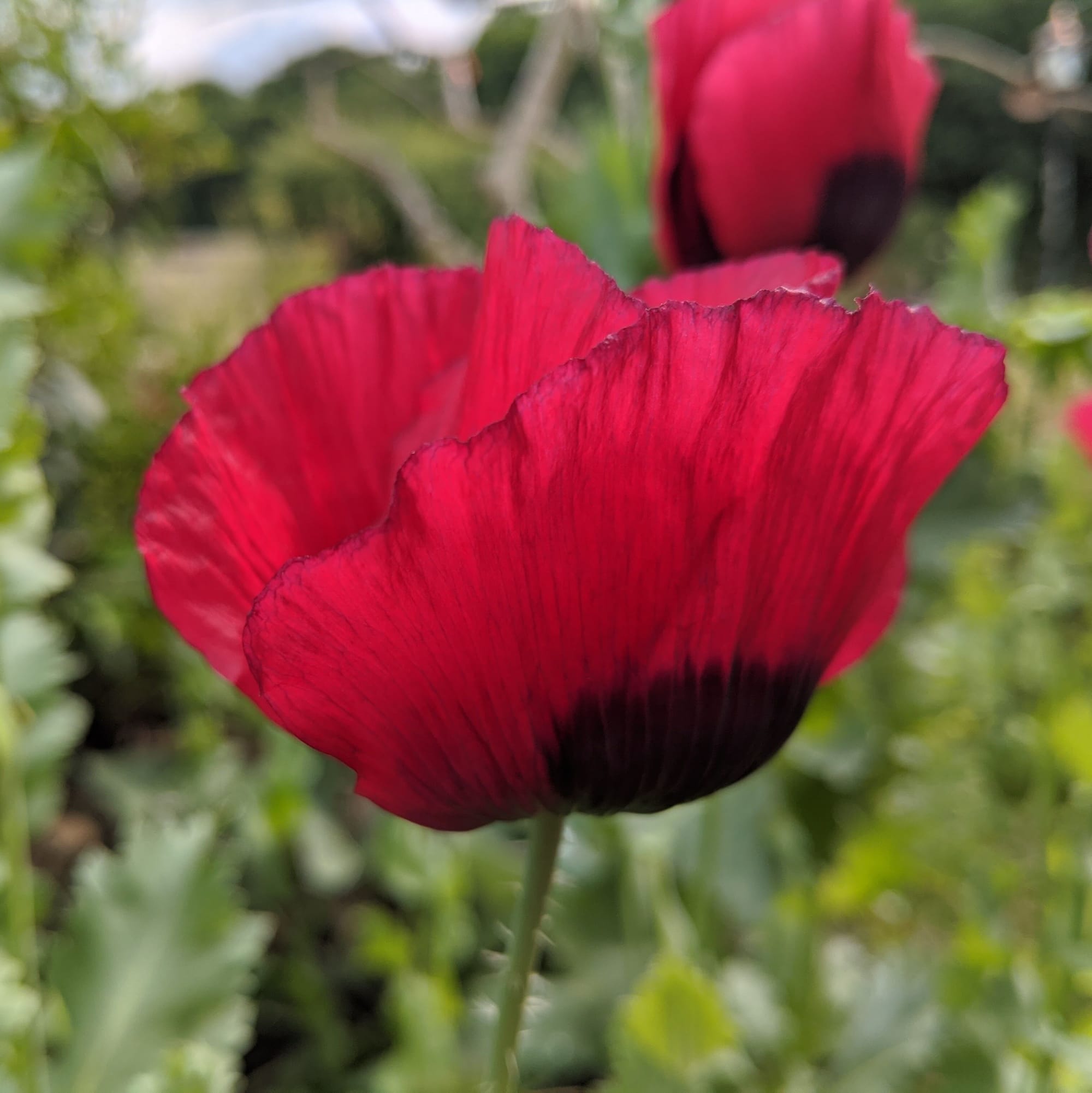
Feeling the pinch...
Brutal, but necessary...
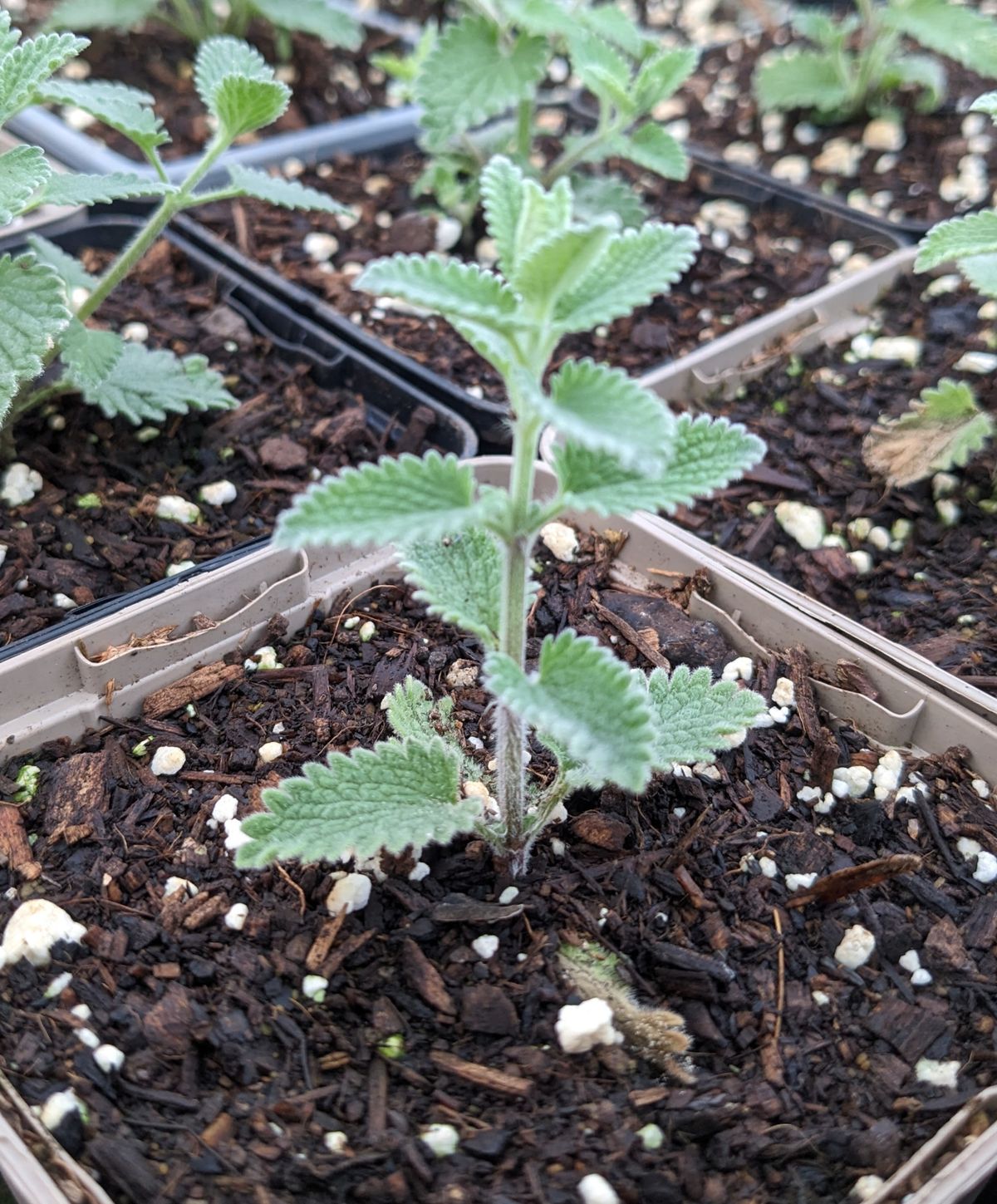
The propagation house is full of rooted cuttings and seedlings, all stretching up towards the extra light in these longer spring days. This, you may be surprised to hear, is a very bad thing.
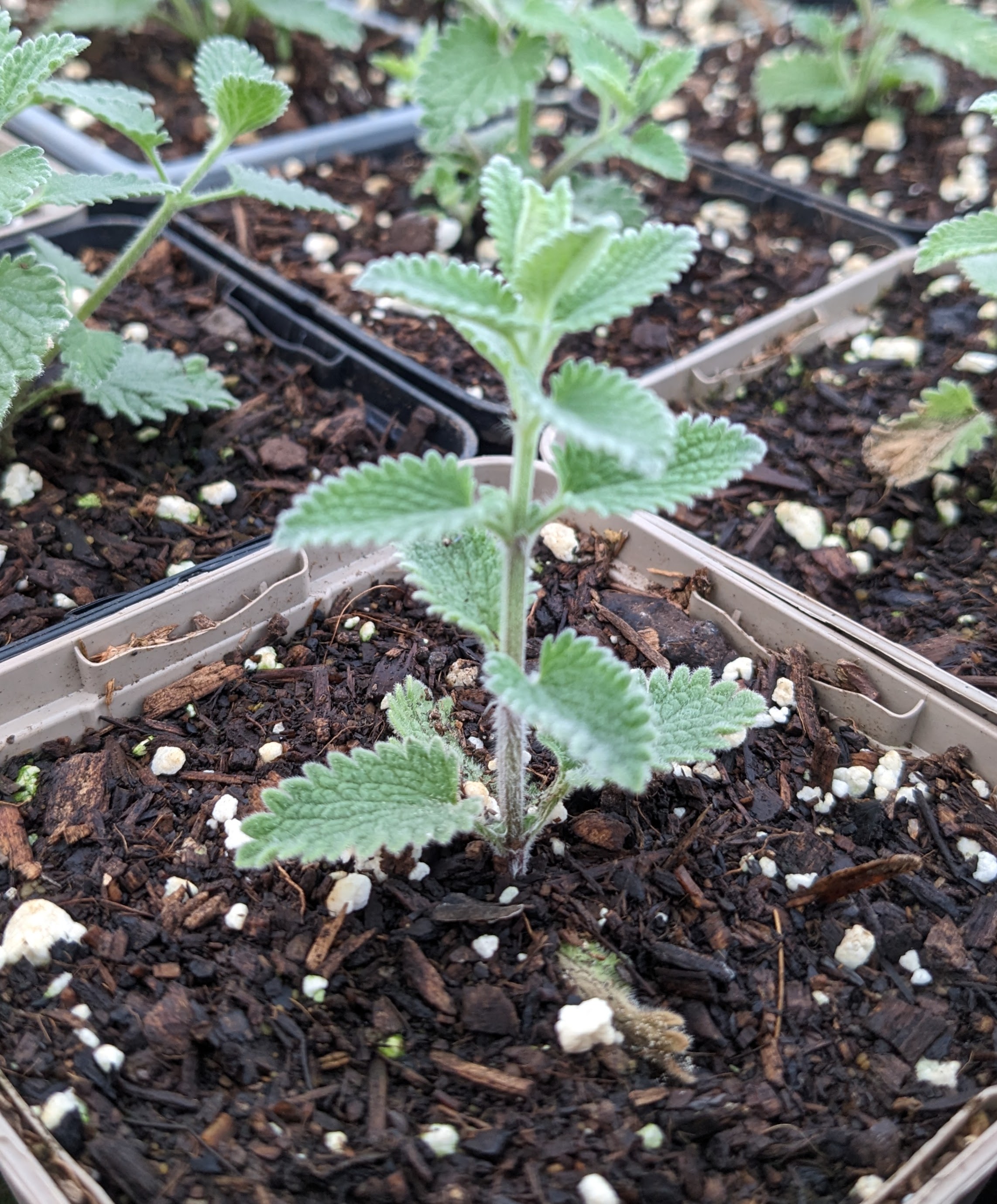
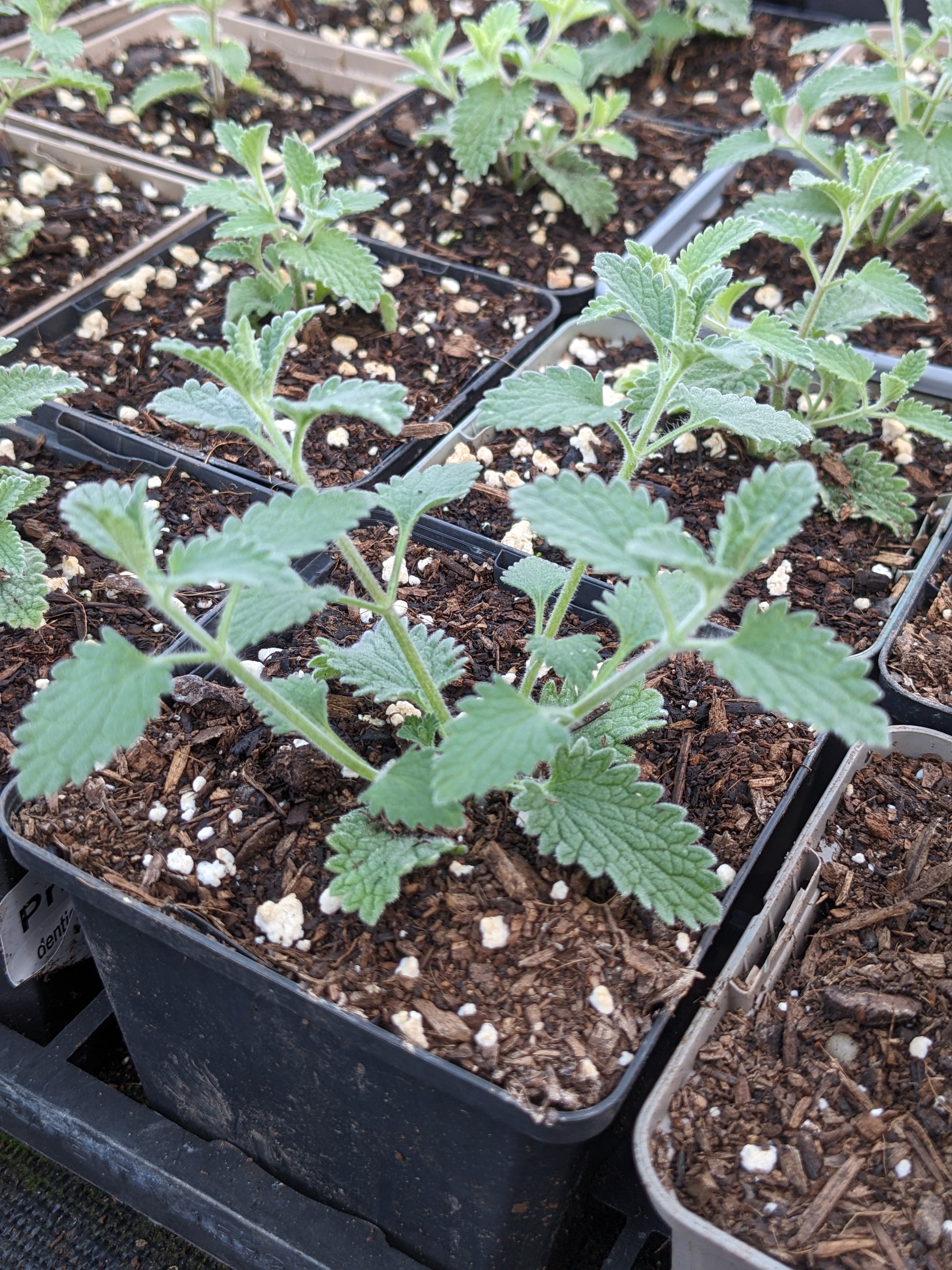
In nature, stretching up towards the light helps a plant out-sprint its neighbours in the battle for light and thus life. But we don’t want thin, single-stemmed plants at the nursery. We want the ones that a passing rabbit nibbled at and which later sprouted from below its nipped off stalk to make a nice bushy plant.
In the absence of rabbits (they make poor propagators as they don’t know when to stop), we must do this task ourselves. It’s called pinching out and you can do it with sharp fingernails, though it’s best done with snips.
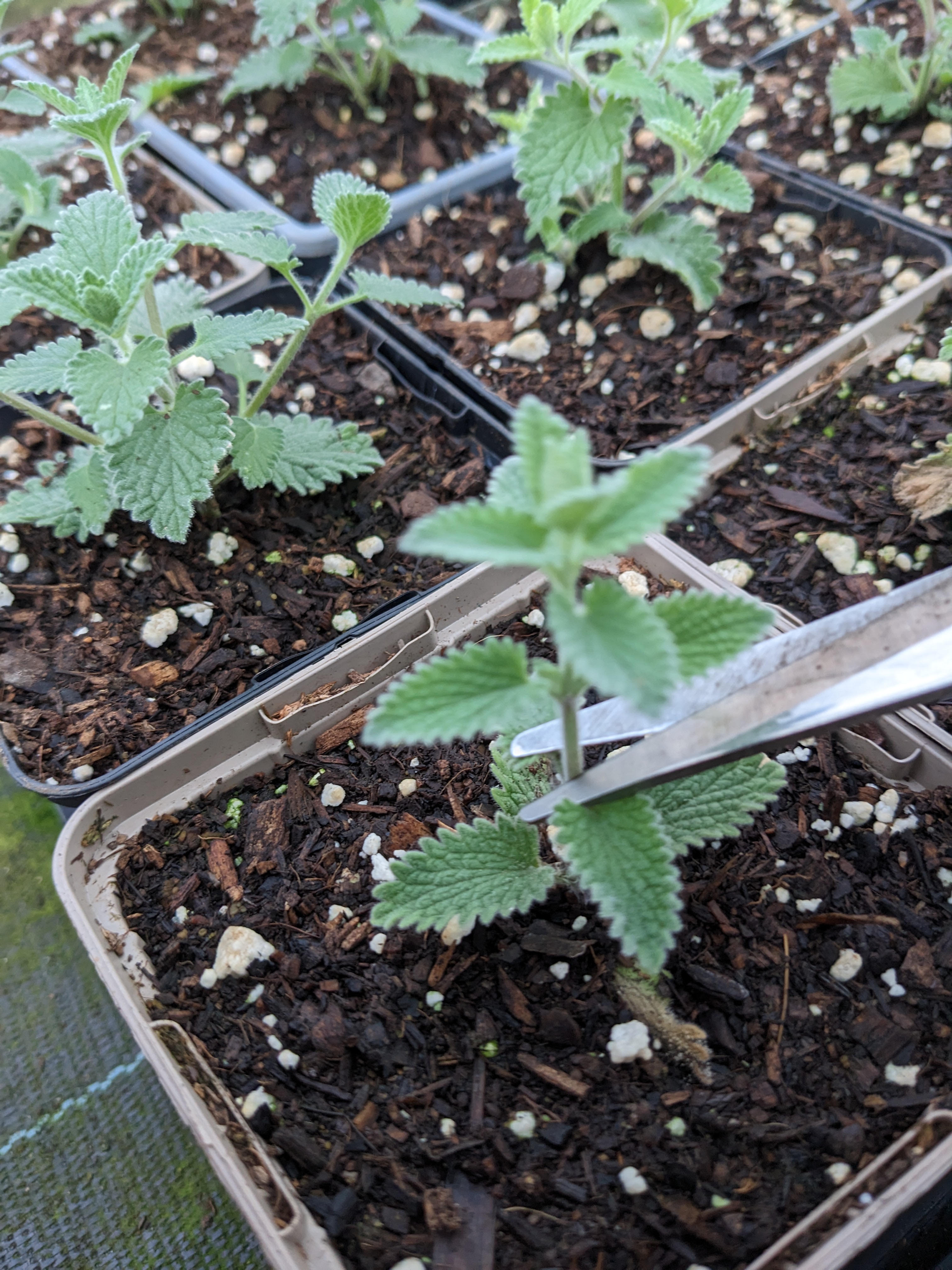
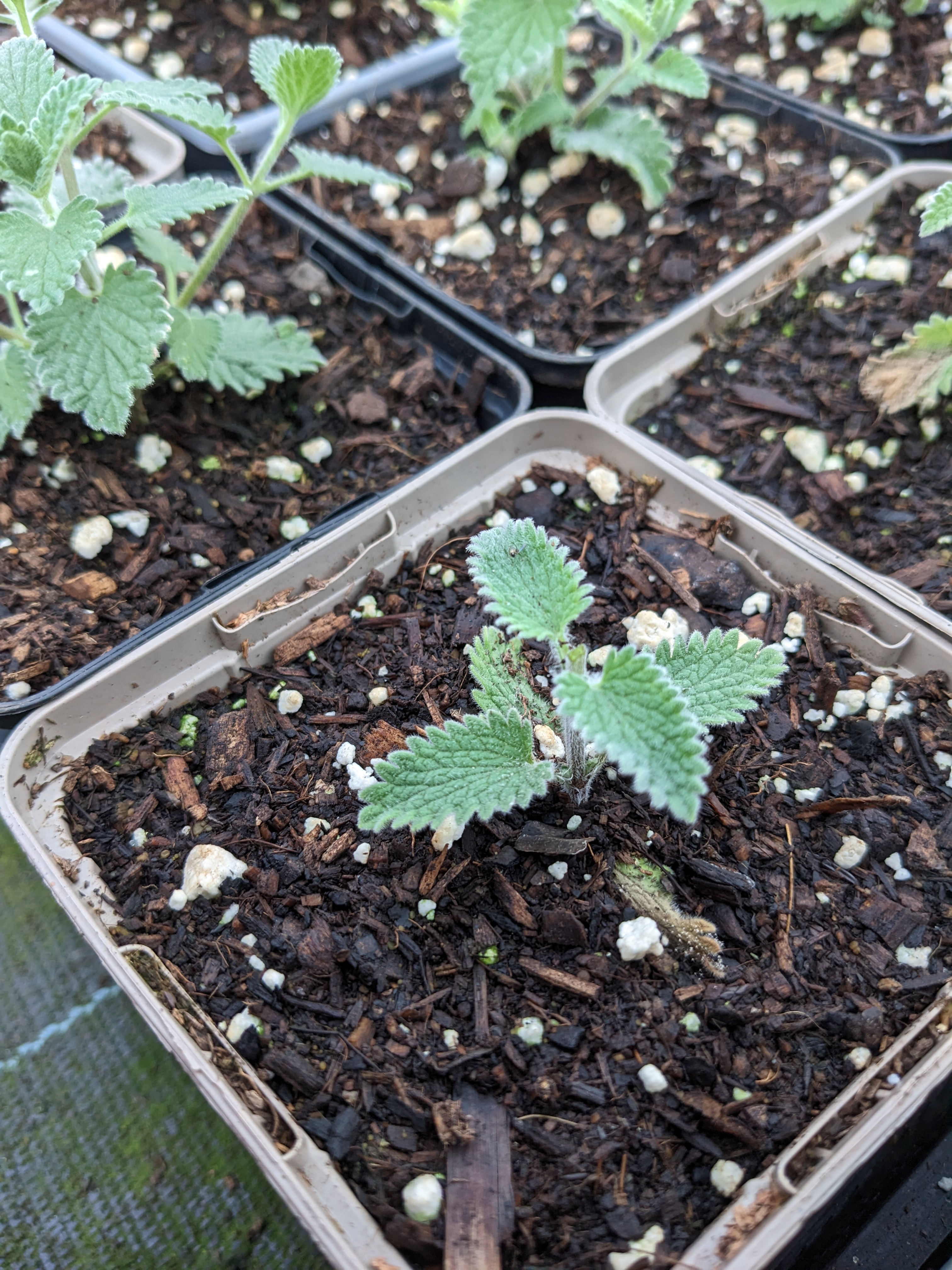
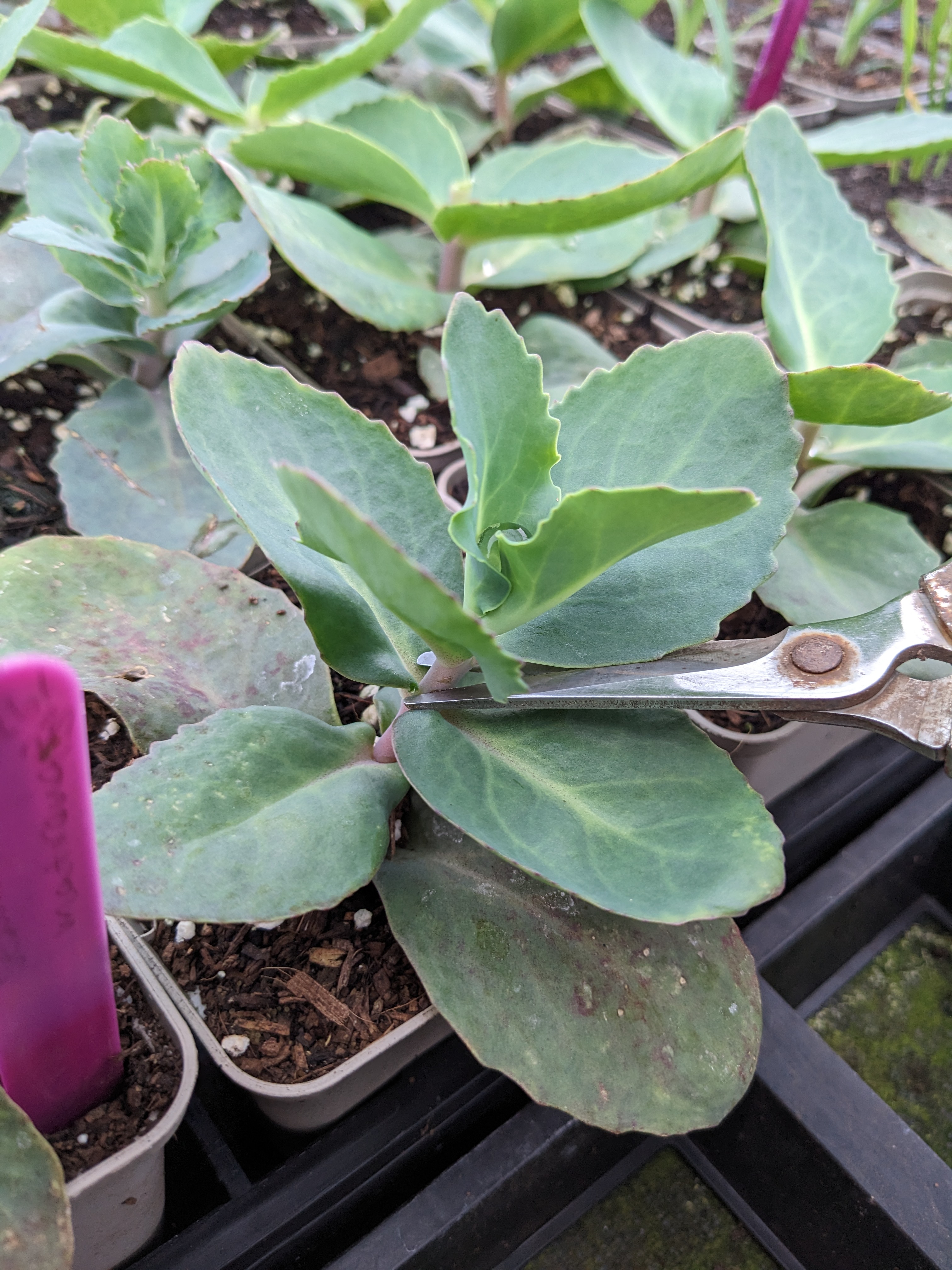
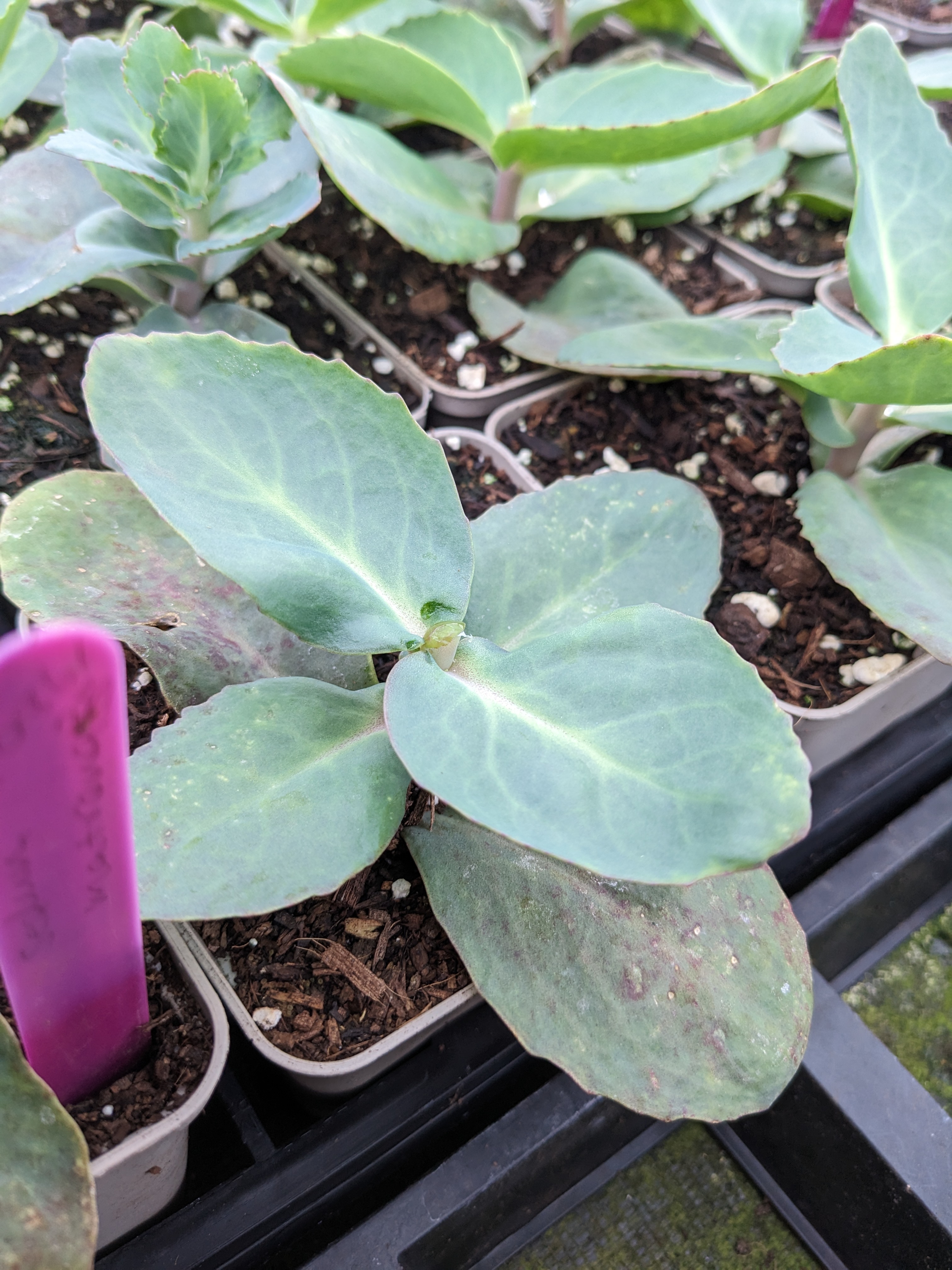
When and how? The when is easy - as early as you feel you can. Left alone, the Nepeta cutting, top left, will keep growing upwards and try to flower, making a skinny, yellowing plant in the effort. I’ve cut it down to the first two pairs of leaves. Each leaf has a dormant bud tucked close to the stem. By cutting above two pairs of leaves, that leaves four shoots to grow which will make a nicely balanced plant as you can see in the first pair of pictures, on the right.
As to how, it depends on the plant. Ideally you want to cut just above a leaf, or leaf pair to avoid leaving a nib of stem sticking up. Flower snips are more accurate than secateurs and you soon get the knack of just sliding the open snips down the stem and snipping as you meet the top of the leaf.
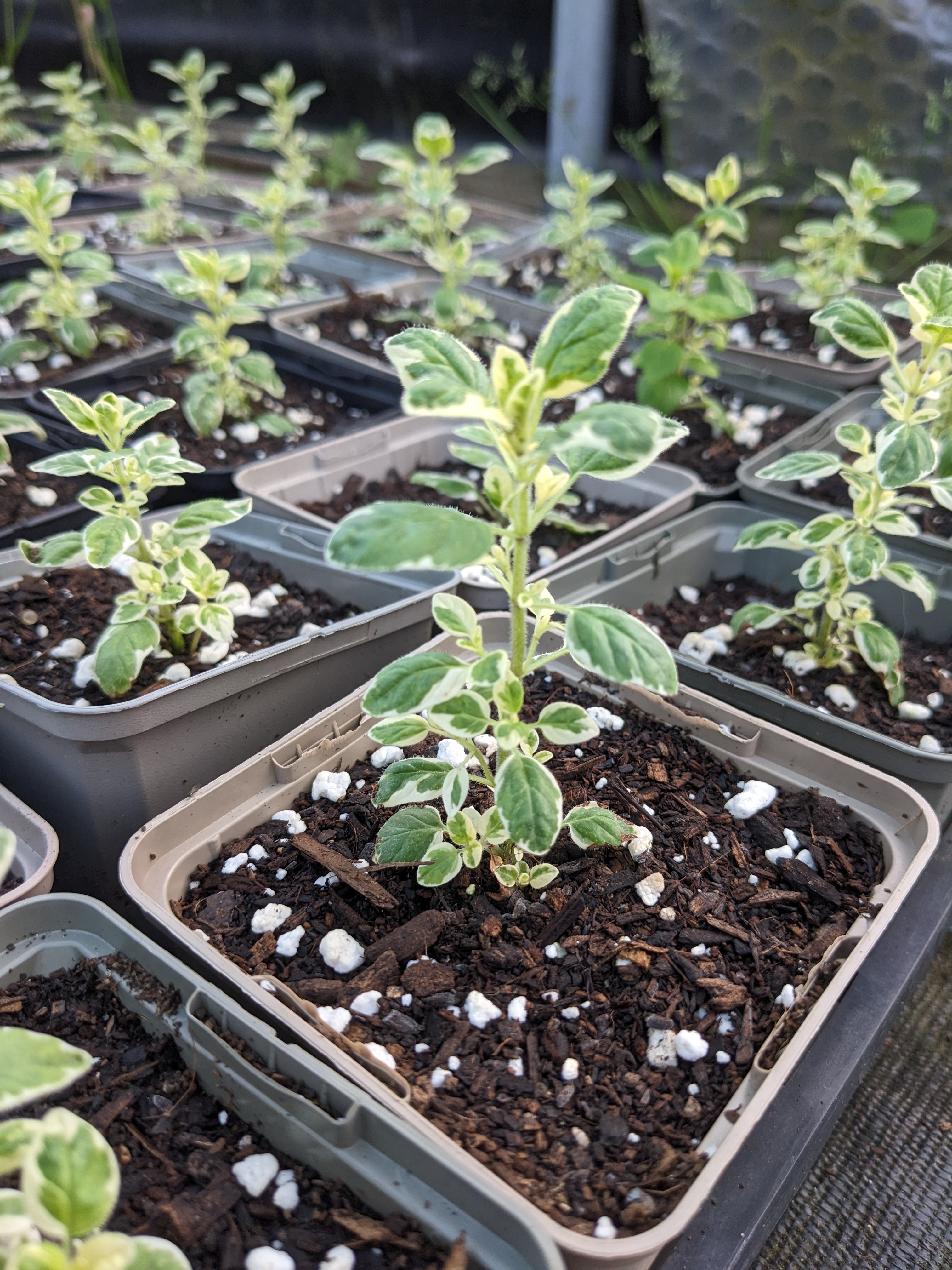
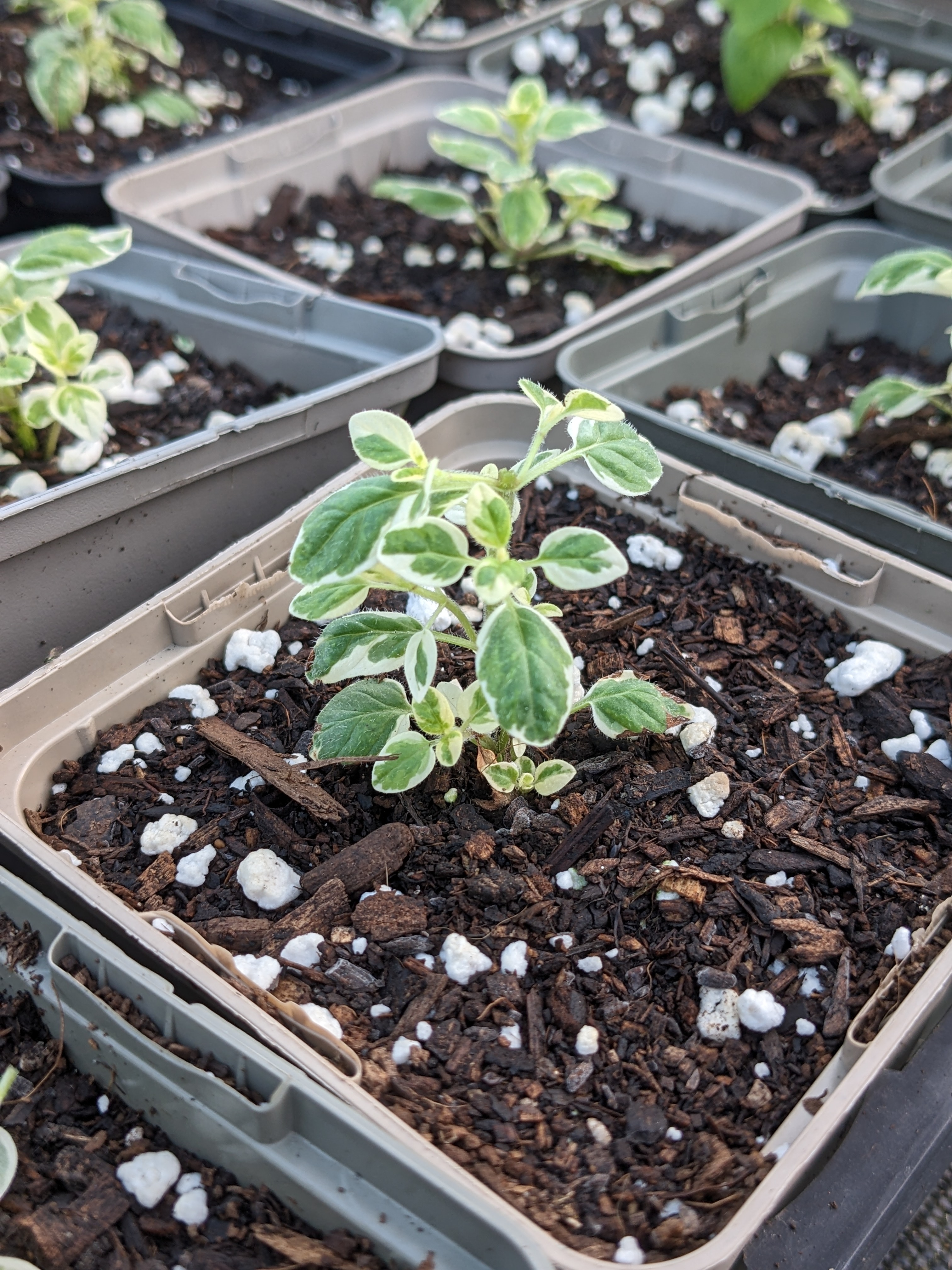
The lovely Oregano ‘Country Cream’ has leaves which sprout close together on the central stem. I had over 100 to do, so I just trimmed the top growth away quickly to leave a neat cluster of leaves near the base. Any stub I left would only be very short, so it doesn’t matter that much.
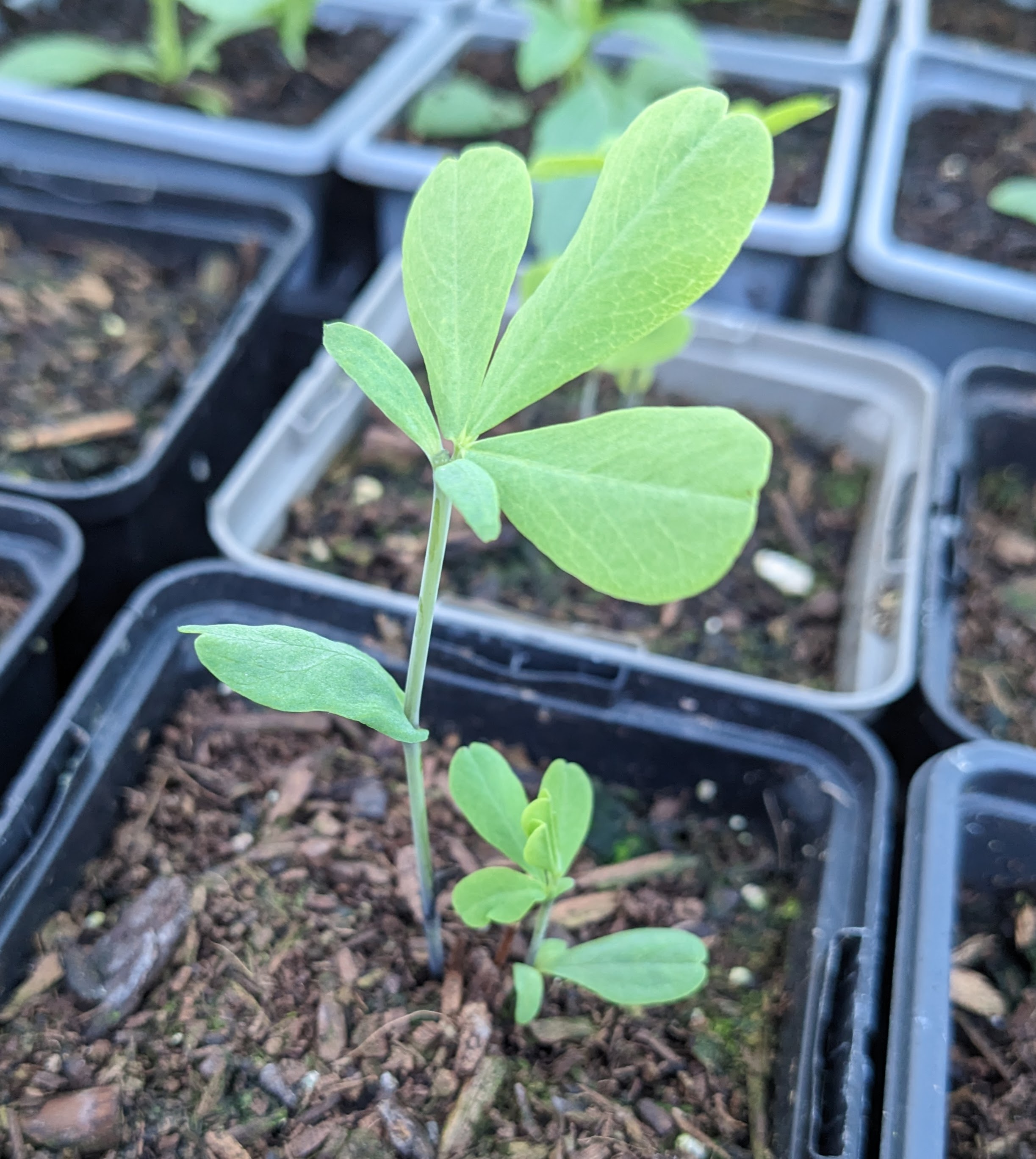
Some plants are worthy of much closer attention. Baptisia seedlings are slower to grow and the leaves are spaced far apart. They are also much more valuable as mature plants. So I attend to each one more carefully, thinking briefly about how much leaf surface the plant can stand to lose as I snip. Leaves are the plant’s engine room - remove too many and you reduce its capacity to grow. It’s a balancing act.
A side-benefit of all this snipping is that the newly nipped off tips are full of growth hormones. Push them gently into some sharp compost somewhere warm and light but out of direct sunlight and see if they root.
On learning from the young…
My little end of blog thought-lets seem quite popular, so here’s one for you. I’ve coined a term - ‘Reverse Generational Information Flow’, and it’s a very good thing indeed. Adrian Chiles wrote about the phenomenon last week and it resonated.
Growing up, we youngsters were expected to learn from our elders and betters. Parents and grandparents had much in the way of life experience to share and we would benefit from listening to them, we were told. Of course, we felt we knew best and bristled against the lectures. Perhaps we were right all along.
I’m very lucky to have many younger people in and around my life. I love hearing their perspective on the world, what they think, what they hope for, what they feel is important. It’s fascinating and informative. Also, they have access to a huge world of online information and boy do they use it. For instance, my eldest, Hazel, is an avid allotmenteer and spends her evenings watching you-tube videos about new growing techniques. I get to hear about all the best ideas without investing the screen time.
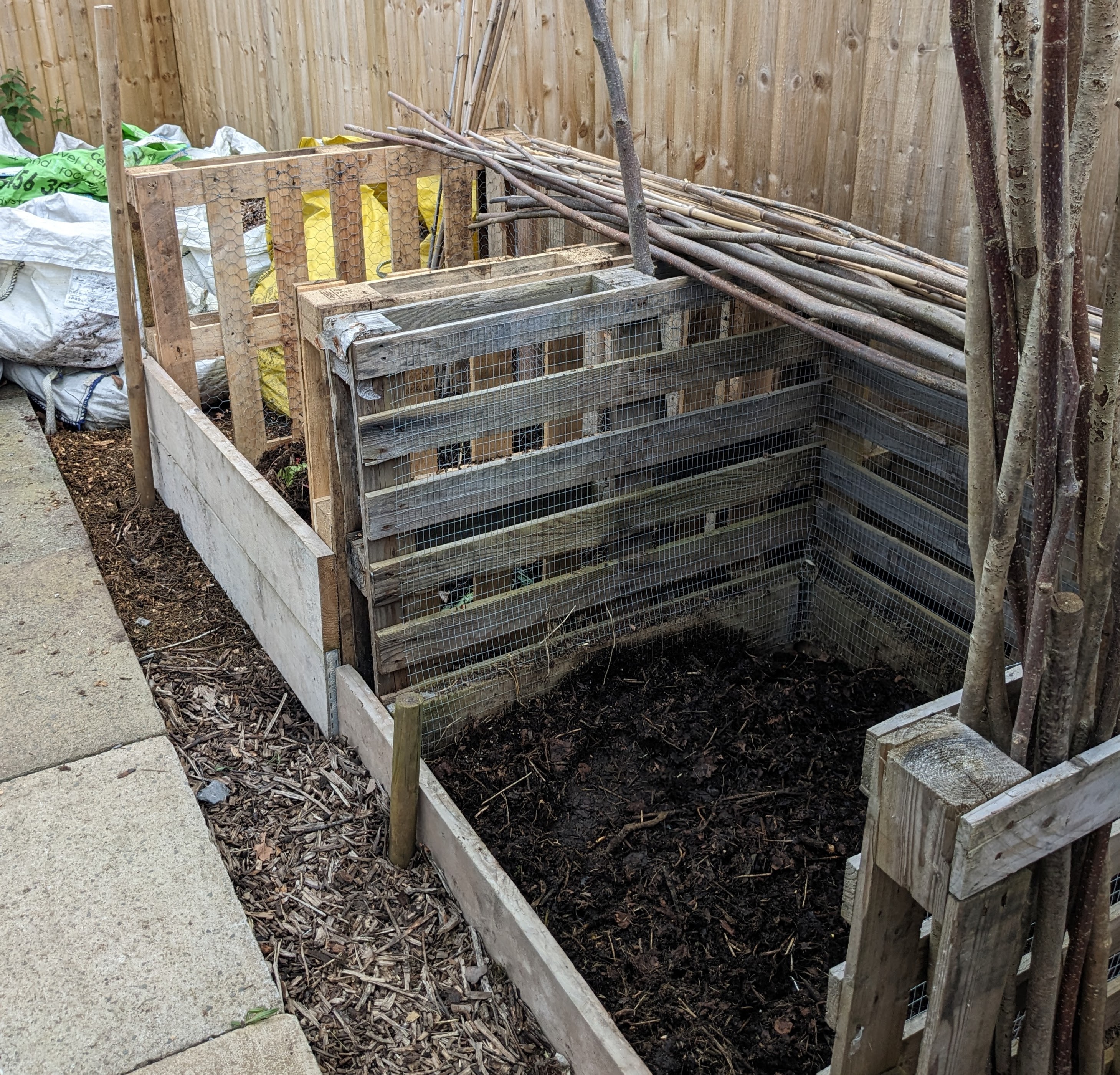
Anyway, our potatoes are shooting very nicely, the onion sets have little green tips and Steve has built a second compost bin out of our stash of pallets. Our methods may be decades old, but they’ll do, for now.