Subtle, shimmering September
Plus - visiting the homes of dead artists, and a foodie heaven in a shipping container.
We have been away for a couple of weeks, pootling around in Kent and Sussex, exploring vast shingle beaches and gazing up at night skies so dark you can trace the Milky Way from end to end. We zigged and zagged about by bus, commuter train, steam train, taxi and extensively on foot, but we were always going to wind up at Prospect Cottage in Dungeness eventually, of which more later…
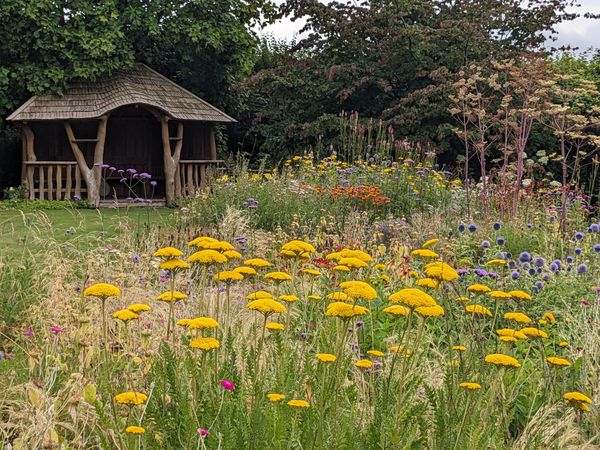
In our absence the garden appears to have chilled out too, put its feet up and begun the slow, gentle slip into autumn.
I love this time of year, not least because I finally get the time - and the inclination - to write. The pace is just so frenetic from April to August, the days so full from first to last light that before an idea has time to take shape the subject has already moved along, and the moment to pause and write about it has gone.
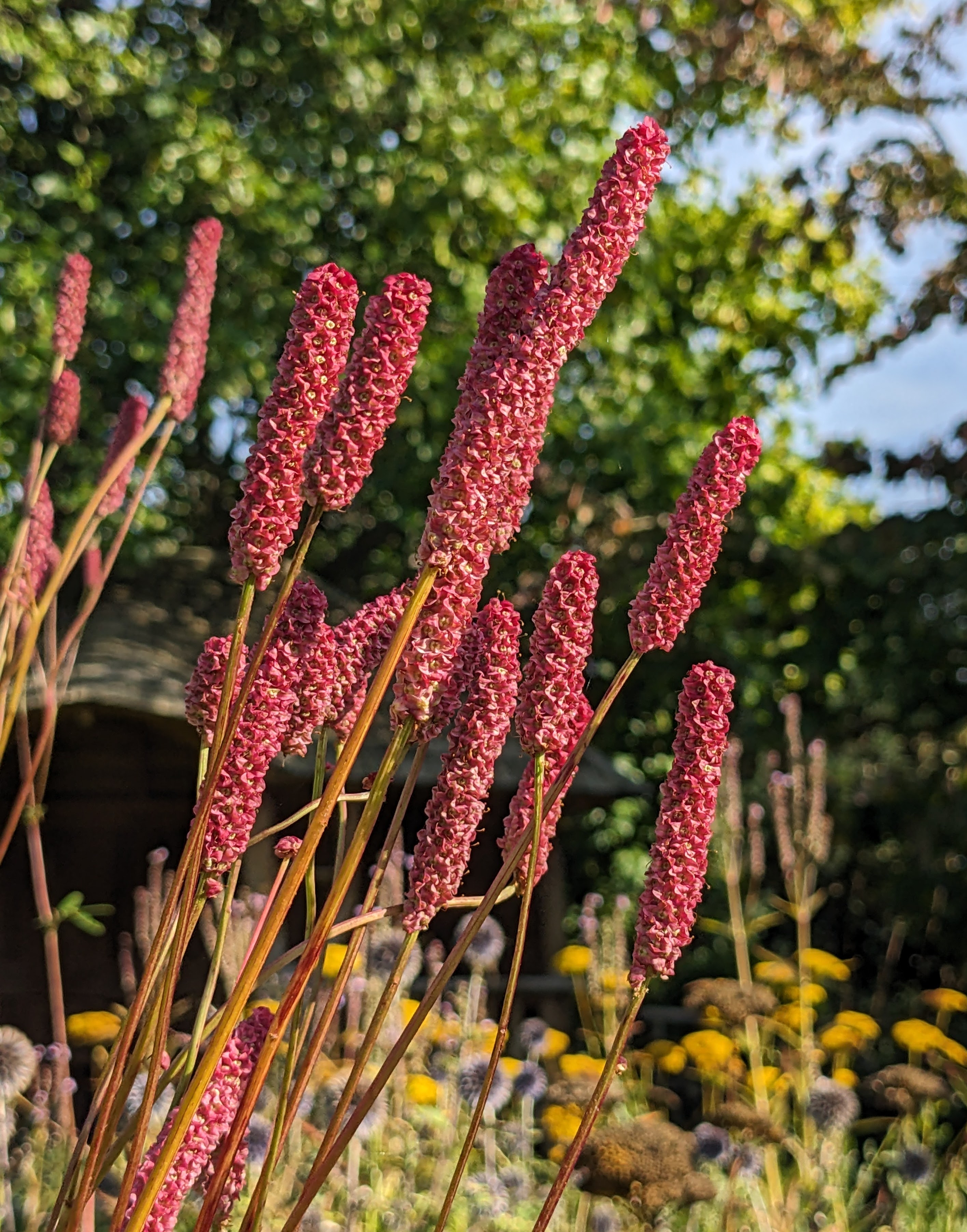
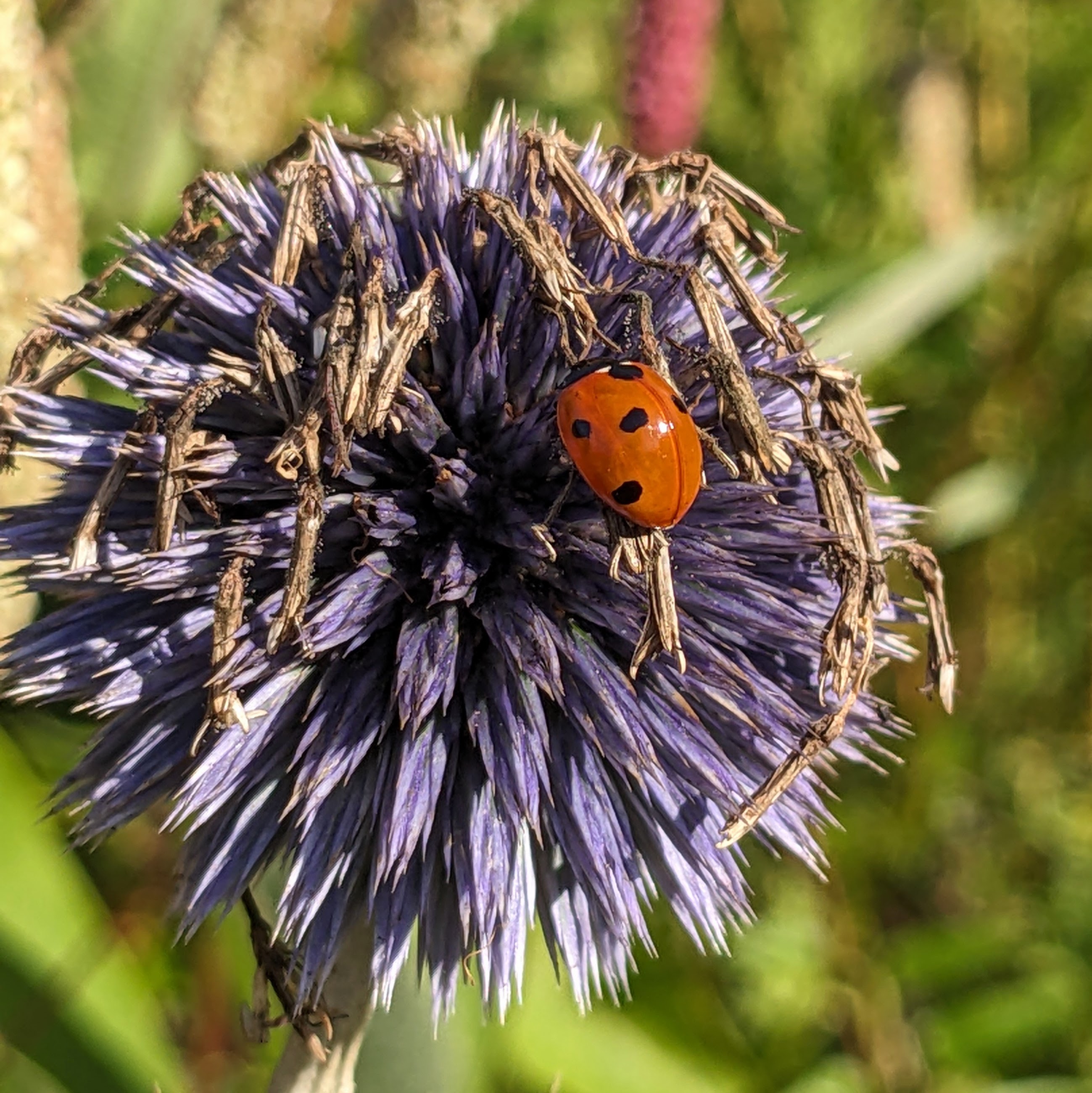
The plants that have waited until now to perform are in no rush to get it over with. Many will fade very slowly, holding their shape, if not their hue, well into the autumn. Sanguisorba ‘Blackthorn’ left, has hundreds of tiny, fine pink petals with black tips in August - these eventually fall to leave these lovely rose-red seed heads. The Echinops, right, open a bright metallic blue, fading to a steel grey, then to brown, over several weeks. There is longevity and subtlety in September’s gems.
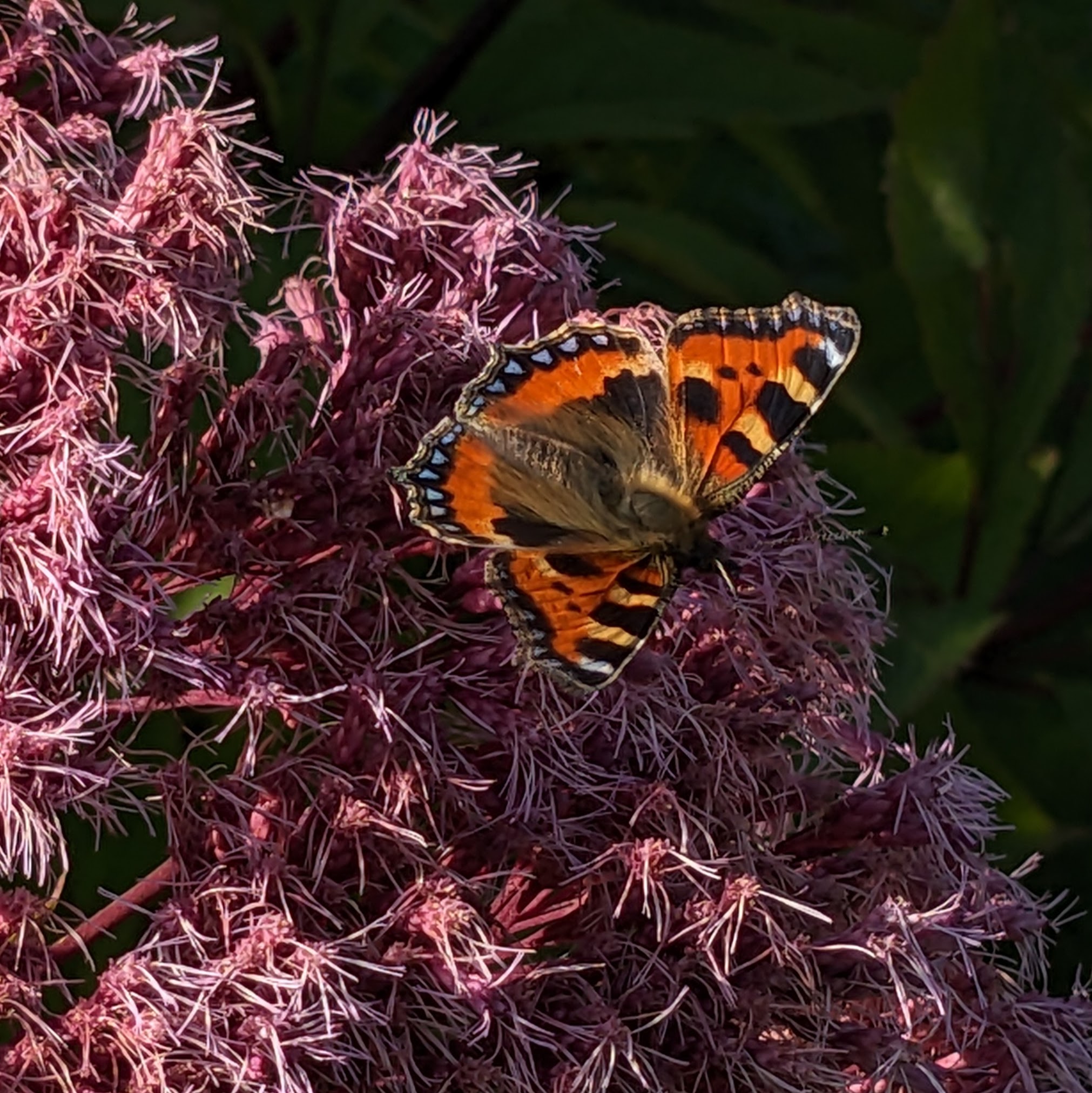
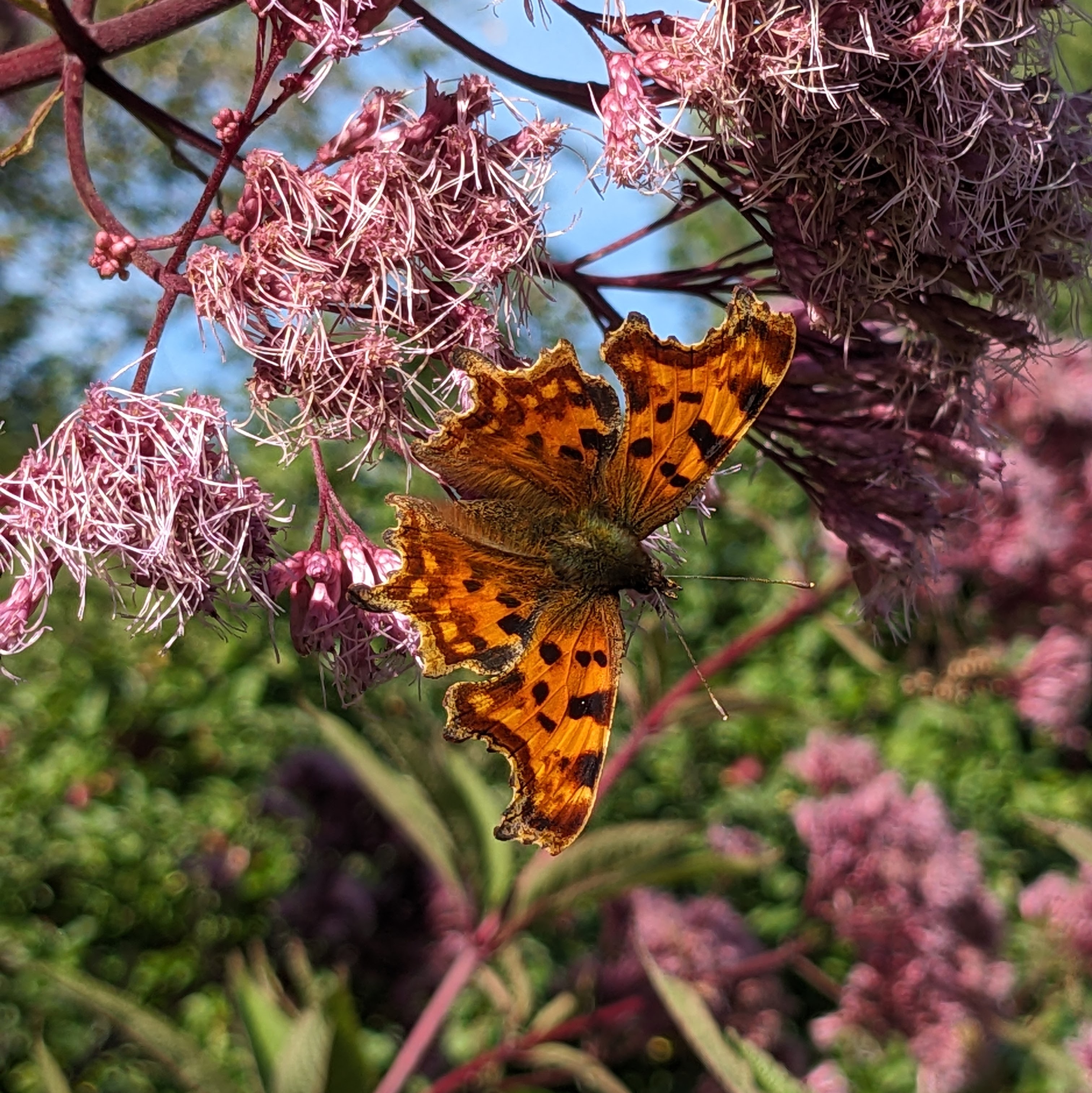
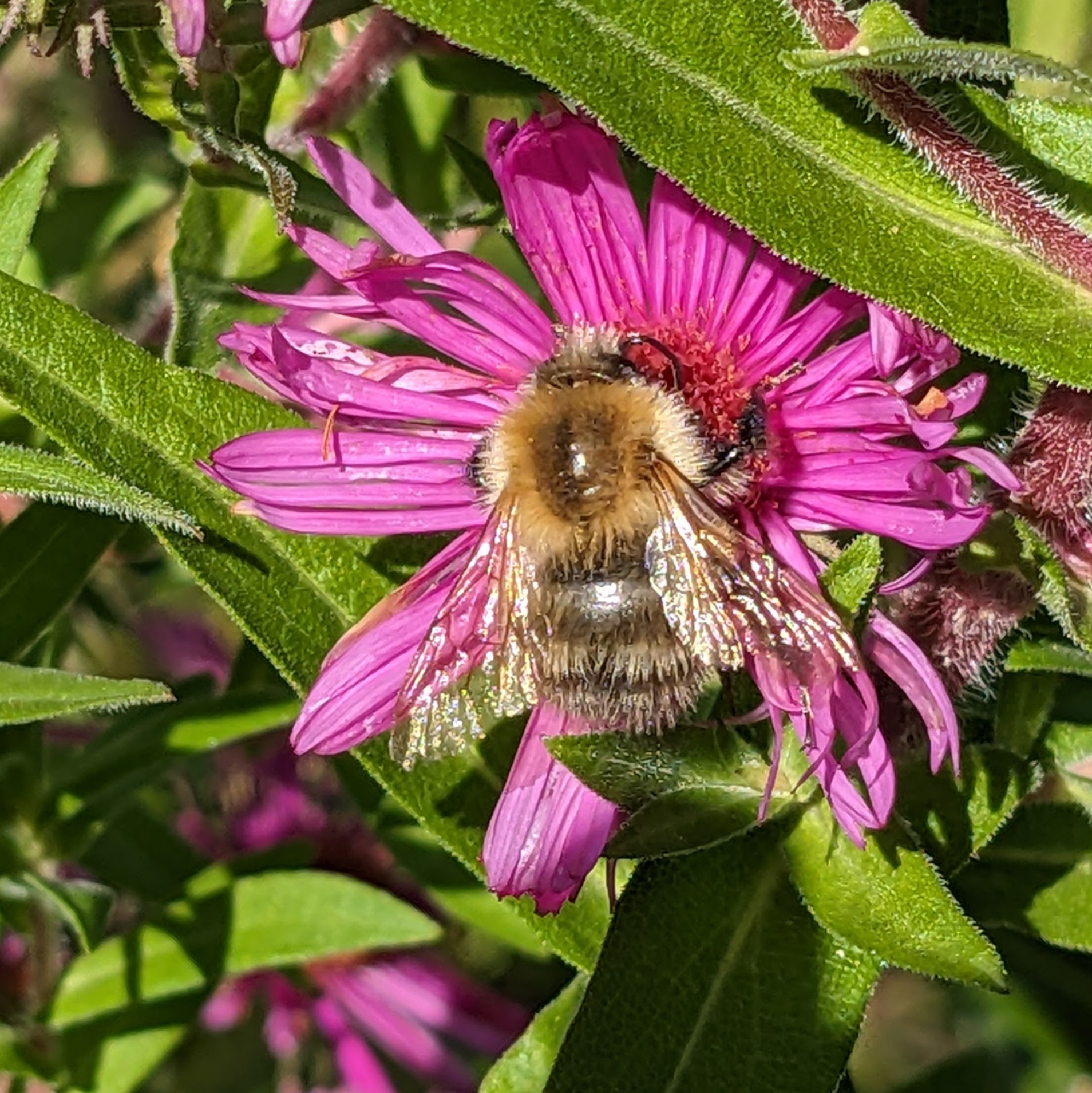
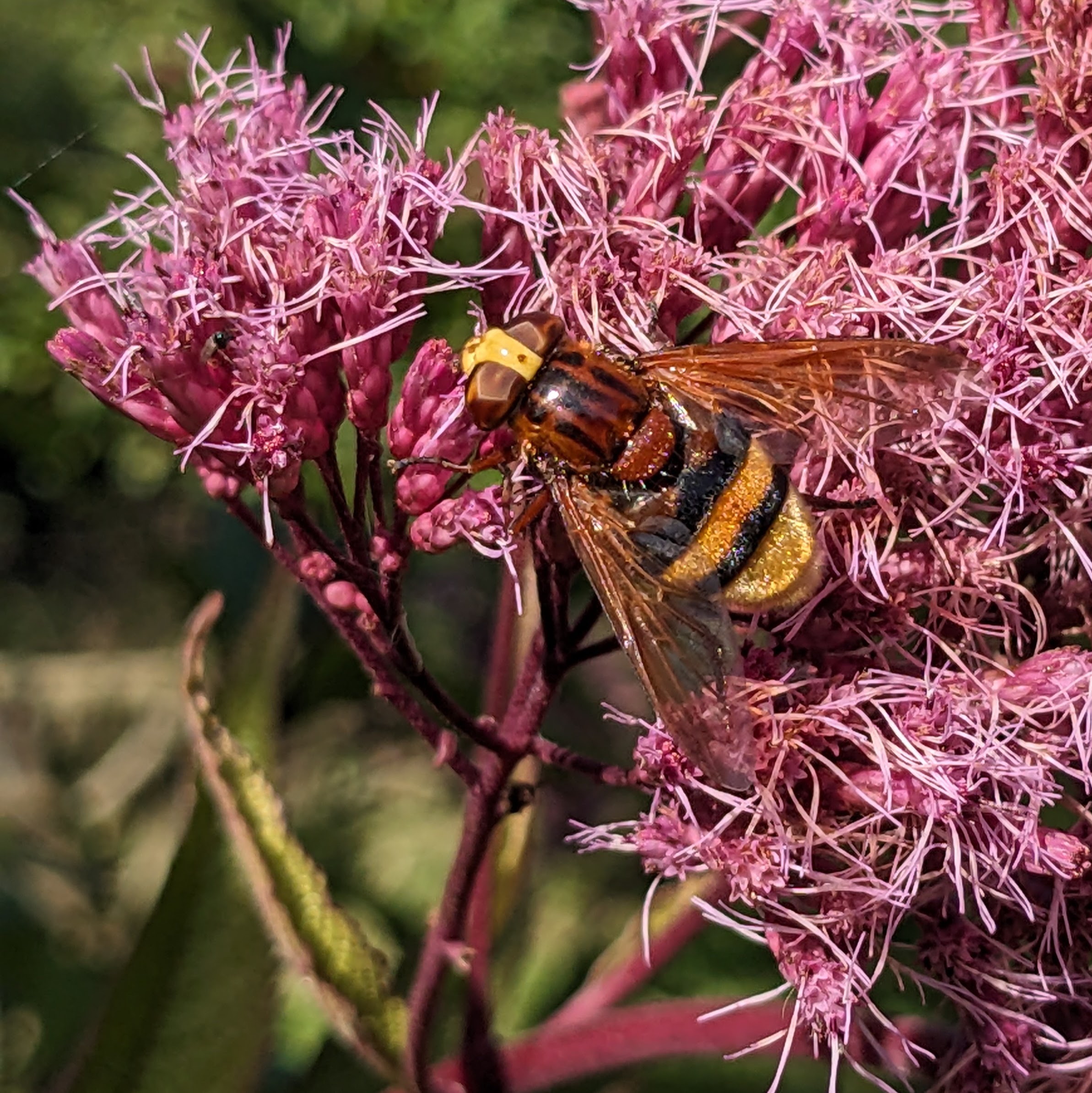
September is a glorious month for insects too, which are hoovering up every available drop of autumnal nectar in a frenzy of dipping and sipping. I watched enthralled as several Commas, Peacocks, a Red Admiral, a Speckled Wood and several Small Tortoiseshells fought over the best spots on the Asters and Echinceas, but most especially the tall, strong and plainly delicious Eupatorium ‘Riesenschirm’. The insect bottom right is a ‘first’ for me - a ‘Hornet mimic Hoverfly’ (Volucella zonaria). It’s the biggest hoverfly in the UK at roughly an inch long. It used to be very rare, then became common in the South East and is working its way north. I can confirm it has arrived in Cheshire.
I keep reading that butterfly numbers are down this year, but maybe their lifecycles are just running a week or two late, as the bees were.
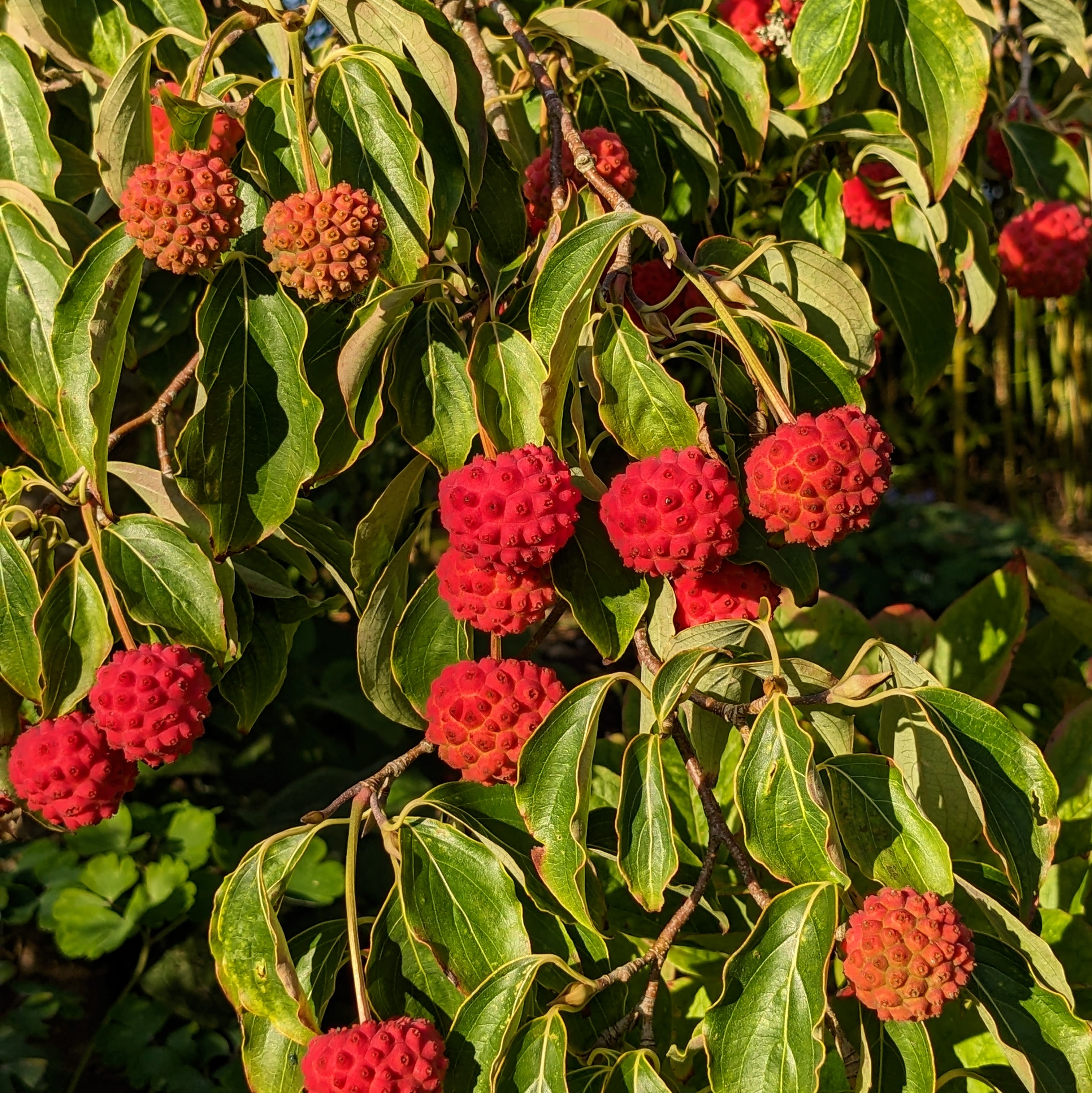
But it’s not a flower which is catching my eye just now. Its’s the knobbly, red fruits of Cornus kousa ‘China Girl’, adorning the tree like baubles in the evening light. The ground beneath it is studded with them, scarlet golf balls embedded in the turf. I have prised open the pithy flesh of a few and squeezed out a few healthy looking seeds. There is such a joy in growing trees from seed and anticipating their future life outliving your own. These are a bit tricky to germinate, but I have to give it a go.
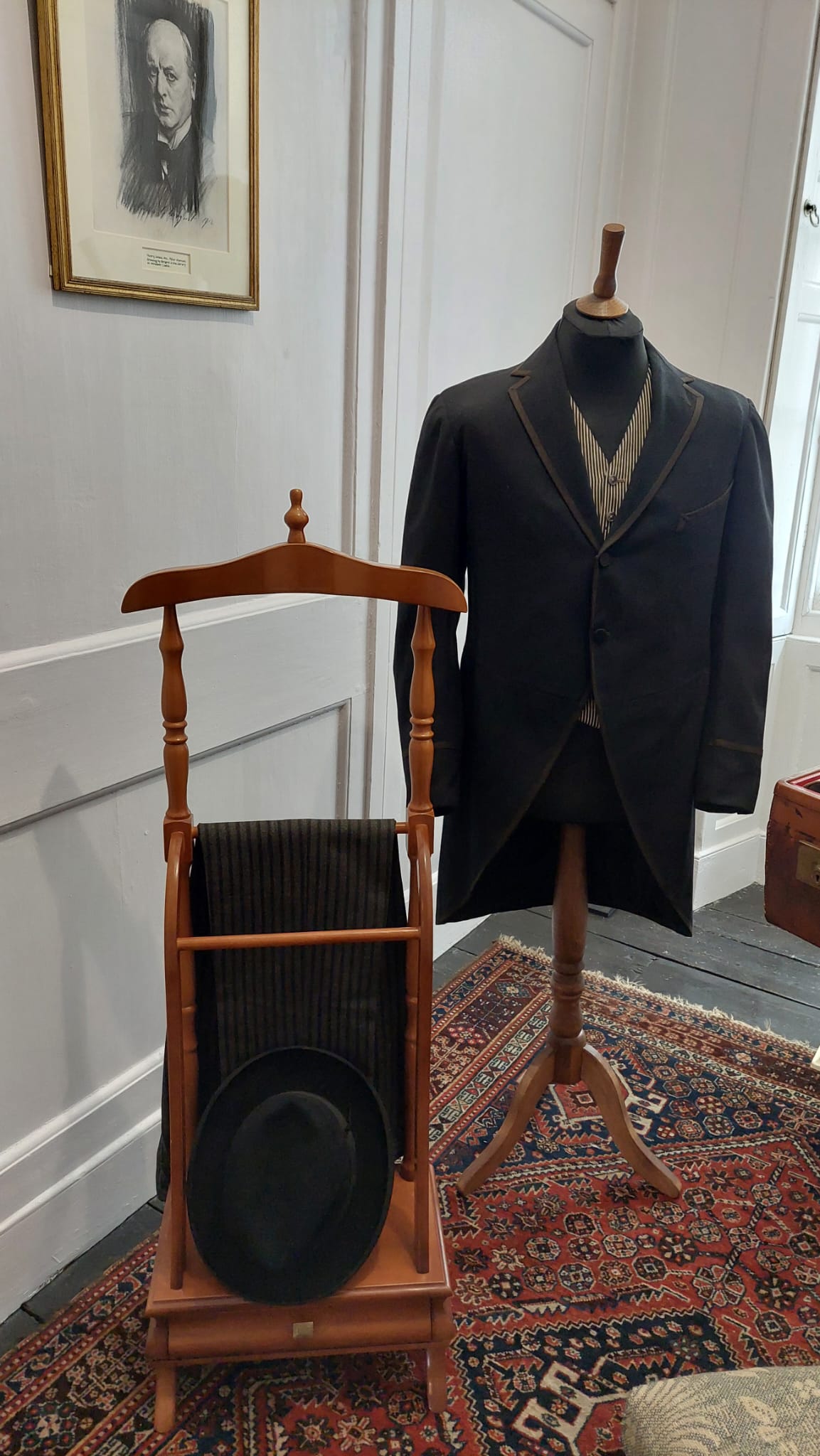
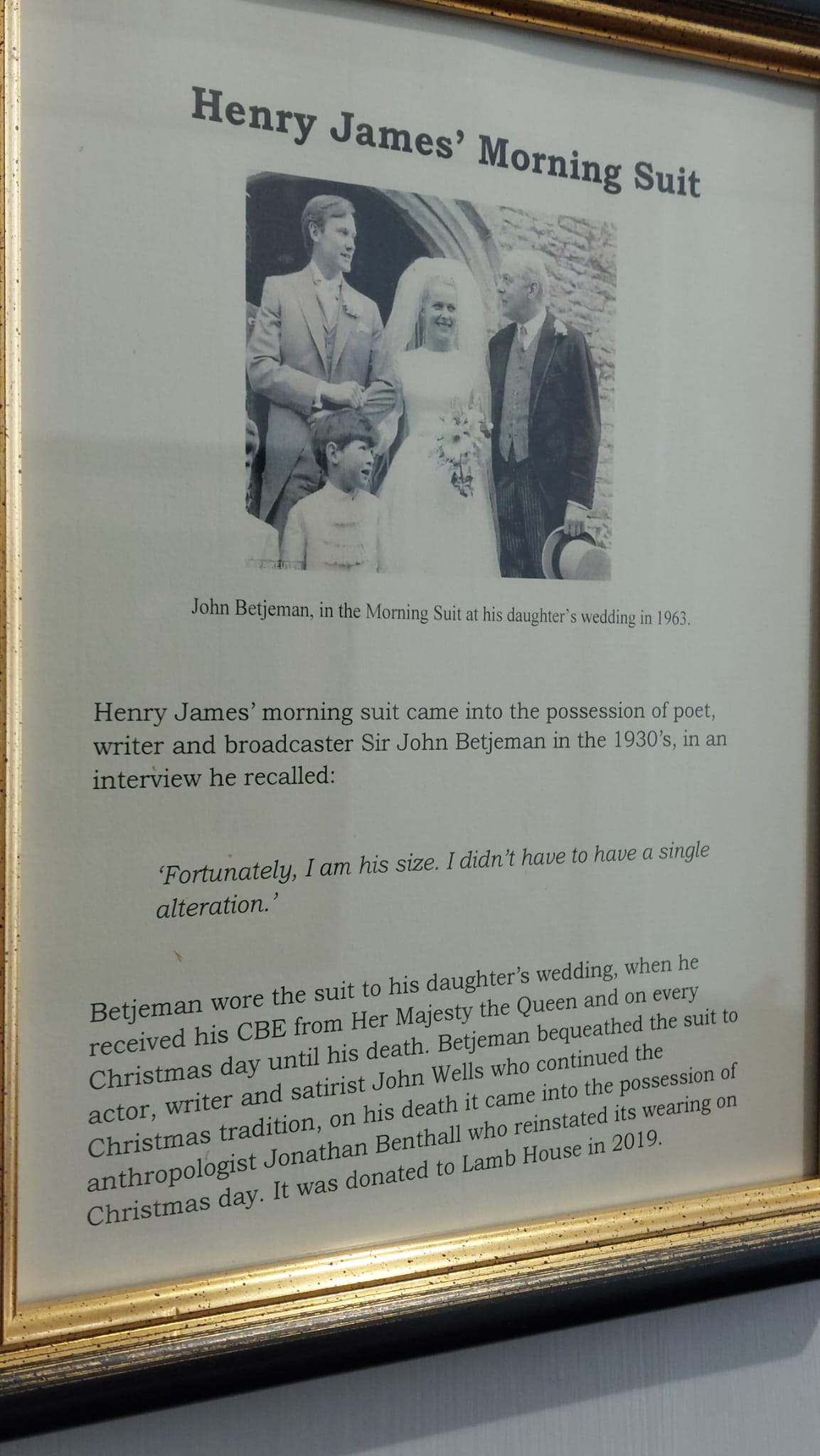
Speaking of futures in which we will not be present, we visited the former homes of two dead artists while we were away. The first, writer Henry James’s home in Rye, Lamb House, left me almost entirely unmoved. We inched our way carefully through rooms set out as if for dinner, starchy and lifeless, peered at glass-fronted library shelves displaying books he may or may not have even owned, let alone read, and entered empty bedrooms which didn’t exist when he lived there. The only touching element was his morning suit, which had been handed down to John Betjemen and then to John Wells on his death. The suit, and a hand-written luggage label returned by a friend, delivered the emotional heft that the furniture could not. It’s always, perhaps only ever, a personal connection that hits the spot.
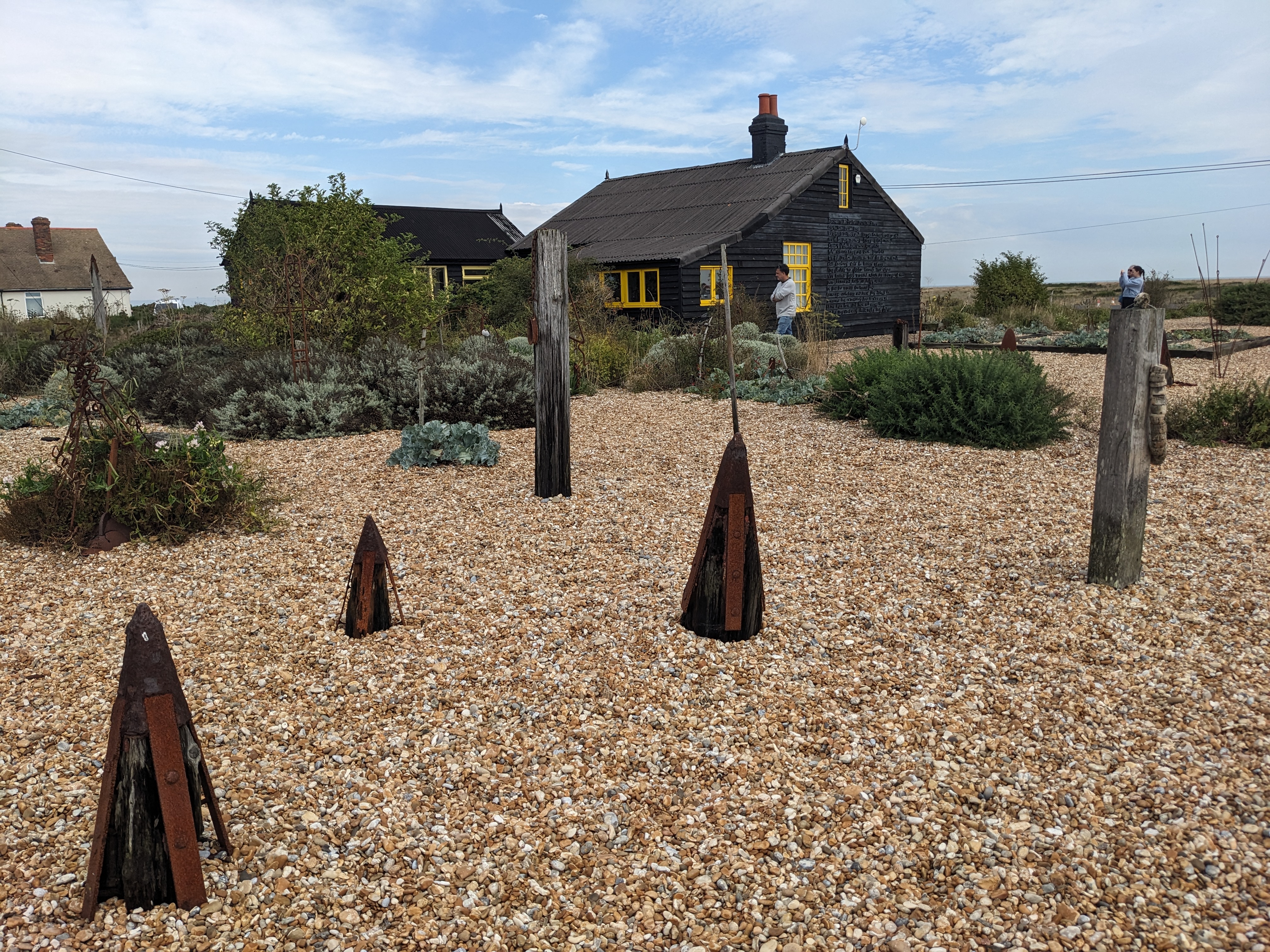
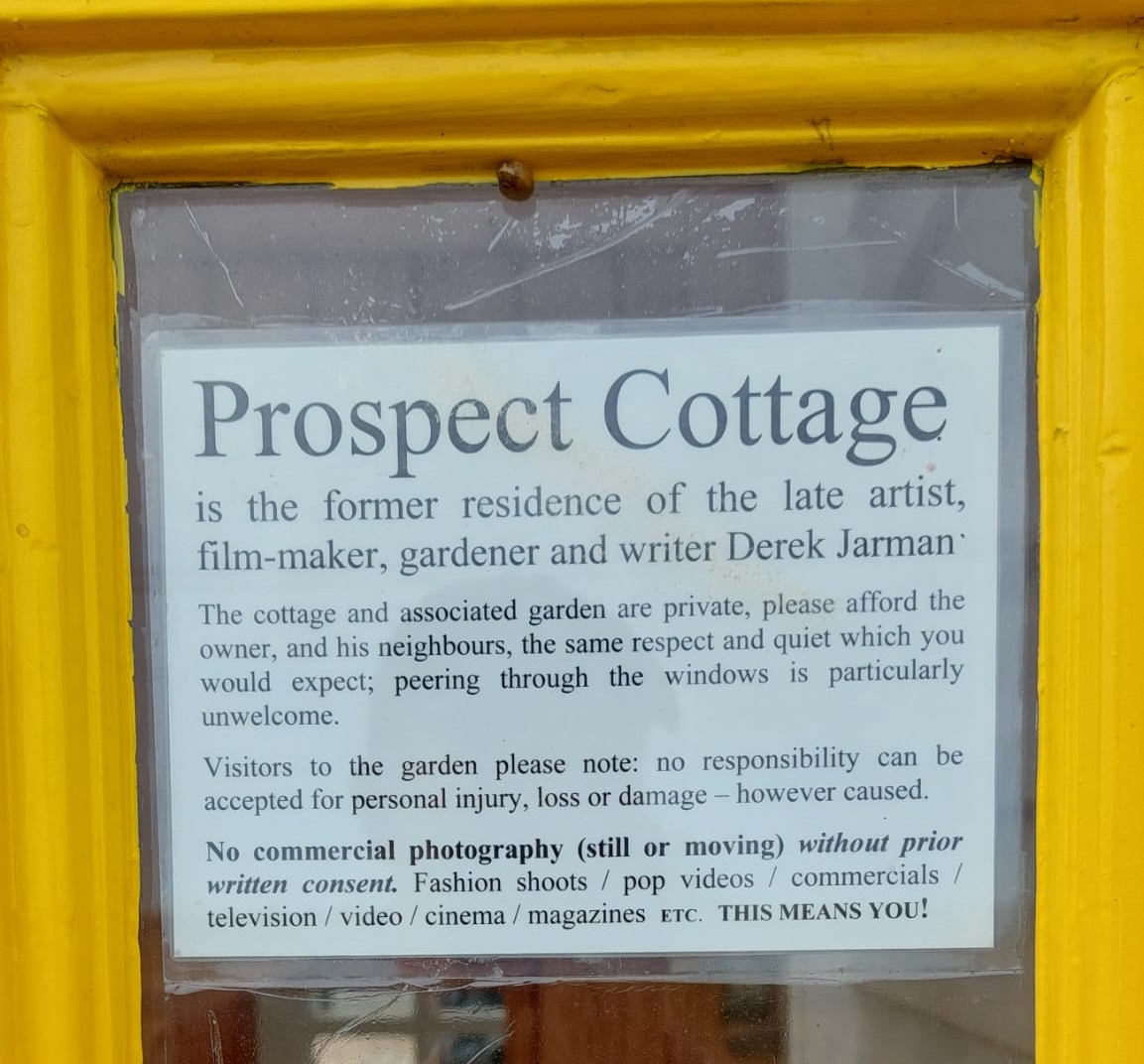
By contrast, the personal is everywhere at Derek Jarman’s ‘Prospect Cottage’ on Dungeness beach. The plot is unfenced (local by-law requirement) and there is nothing to prevent accidental passers-by and devotees from strolling into the garden to have a good nosey around at his enigmatic collection of beachy bits and bobs, and to check on his plants. Somewhat ironically, you have to get within a foot of the front door to read this sign….
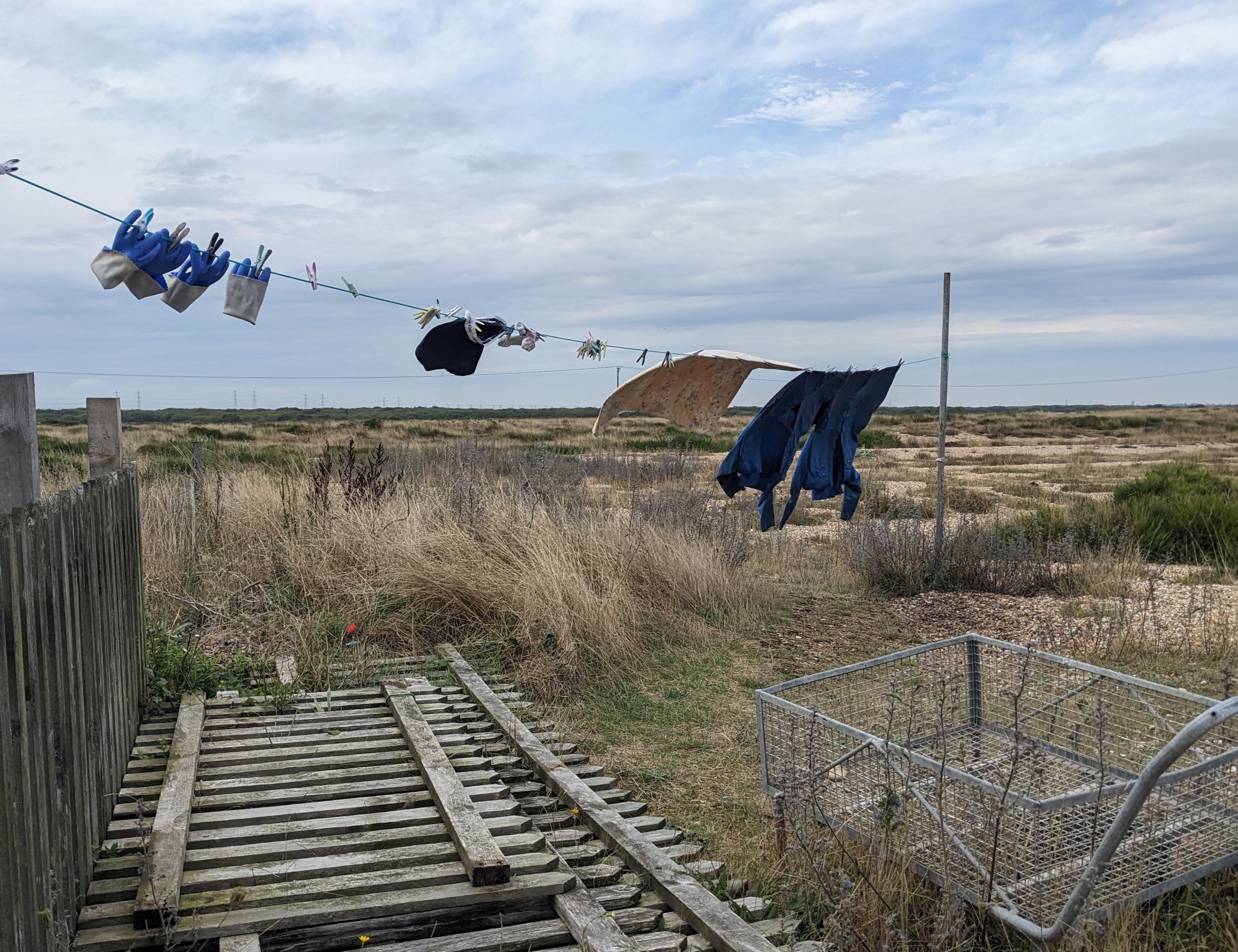
The house and gardens are owned by a trust and the occupier is an ‘artist in residence’. The artist in question clearly has a sense of humour. The washing line at the back is adorned with two pairs of Derek Jarman’s favoured blue overalls, a dingy floral sheet, two pairs of blue rubber gloves and a pair of mens undercrackers. Or maybe the joke was on us and we simply took a photo of the resident artist’s laundry. Either way, ‘chapeau’, to the pegger-out of washing.
I re-read ‘Modern Nature’ during the trip. Searingly open about his personal and film-making life, it’s also - arguably mostly - about his relationship with this place; the provisional nature of the shifting shingle, a landscape at the mercy of the sea and storms, of his efforts to create a garden and of the tough, intriguing people who live and work there. It is beautifully, evocatively written. His love of it shimmers through the pages.
Here, there is no carefully curated re-creation, no daily-dusted teapot placed in the same position every morning, no earnest greeter repeating the gushing evocation of the famous former resident that you had just heard them say to the couple ahead of you, as there was at Lamb House.
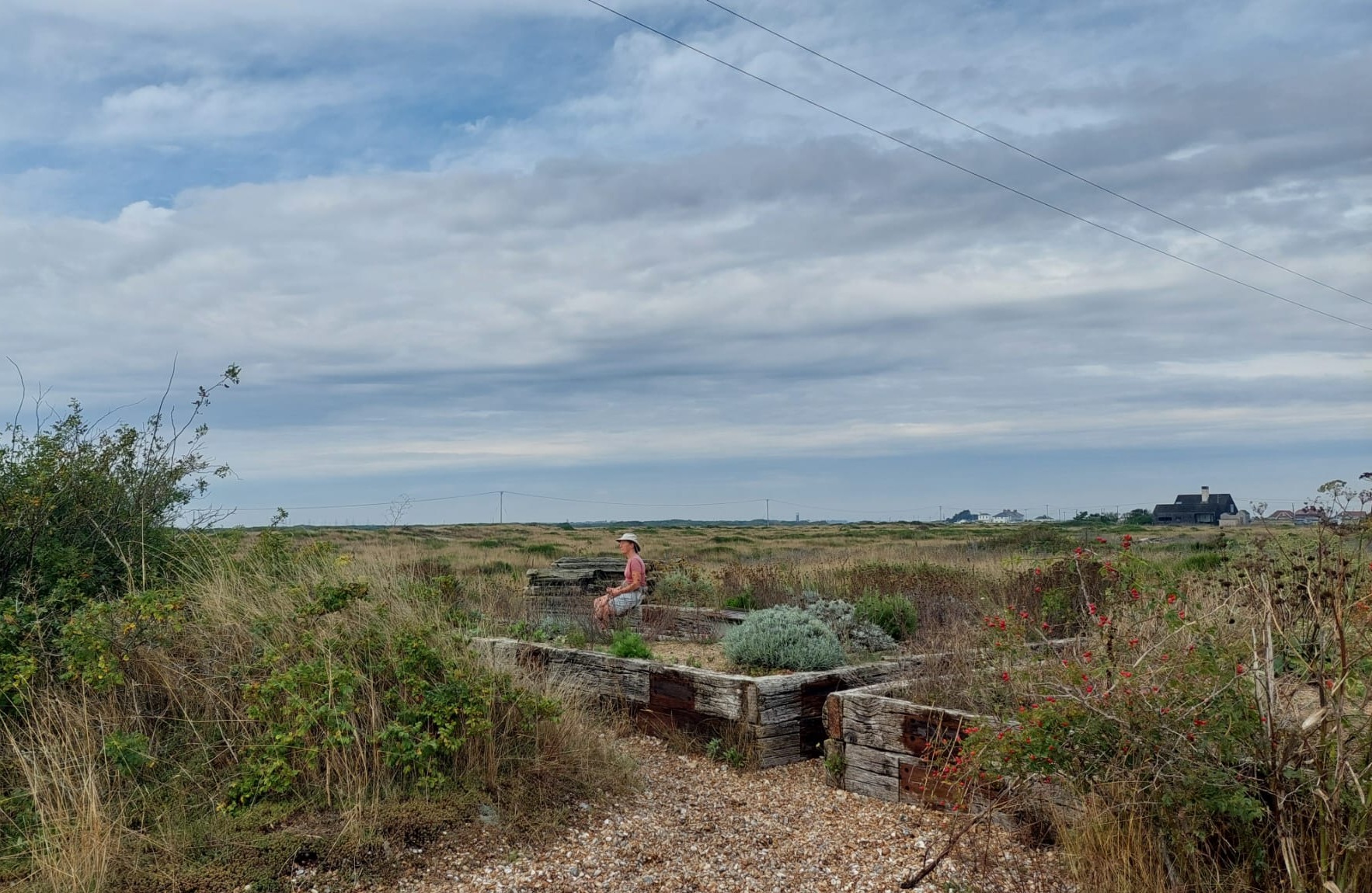
I perched on one of the wooden sleepers that Jarman created the raised beds with, now splitting and softening in the salt air. I breathed in the spicy scent from his curry plants, or maybe their offspring, and settled my gaze across the exhilarating, wide open landscape to the nuclear power plant. It’s essentially the same view he had, but it is constantly changing as the shingle shifts and the plants grow, die and re-seed. Surely no two visitors see exactly the same thing, and I think he would have liked that.
And I thought about why we visit places like this. What draws us to the former home of a dead artist? Is it a kind of modern pilgrimage, a simple homage to greatness? Are we trying to make amends for not being able to express our admiration in their lifetime, hoping that maybe, just possibly, they can hear us now? Is it a kind of lodestone - do we hope that by touching their world a little creative magic will rub off and awaken our own inner artist?
No answers came to me, sitting there in the sunshine. But I took the time to ask myself the question, and maybe that’s the point. To think a little about creativity and art and how it still moves us, years, decades and even centuries after the mind that forged it is long gone.
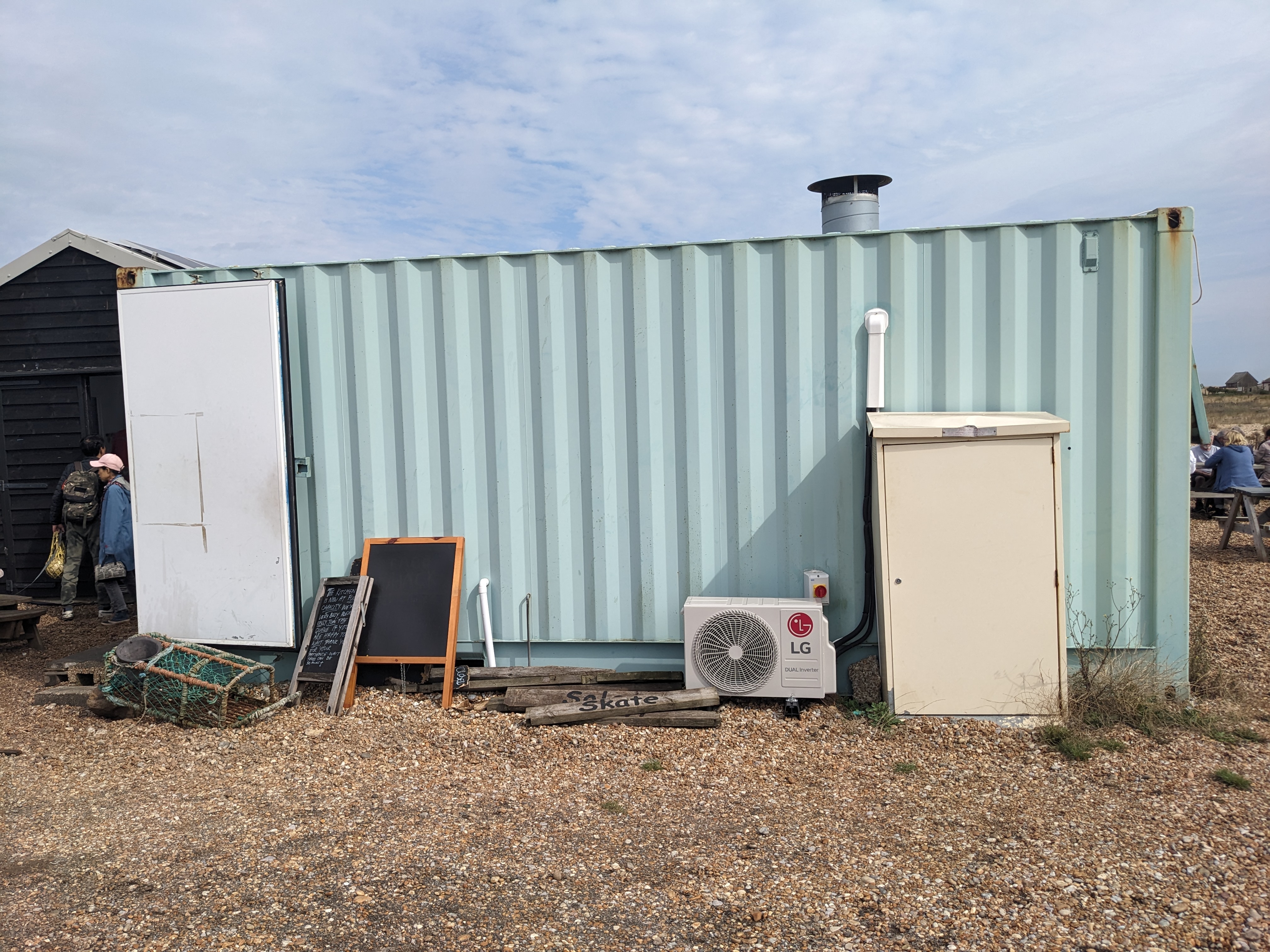
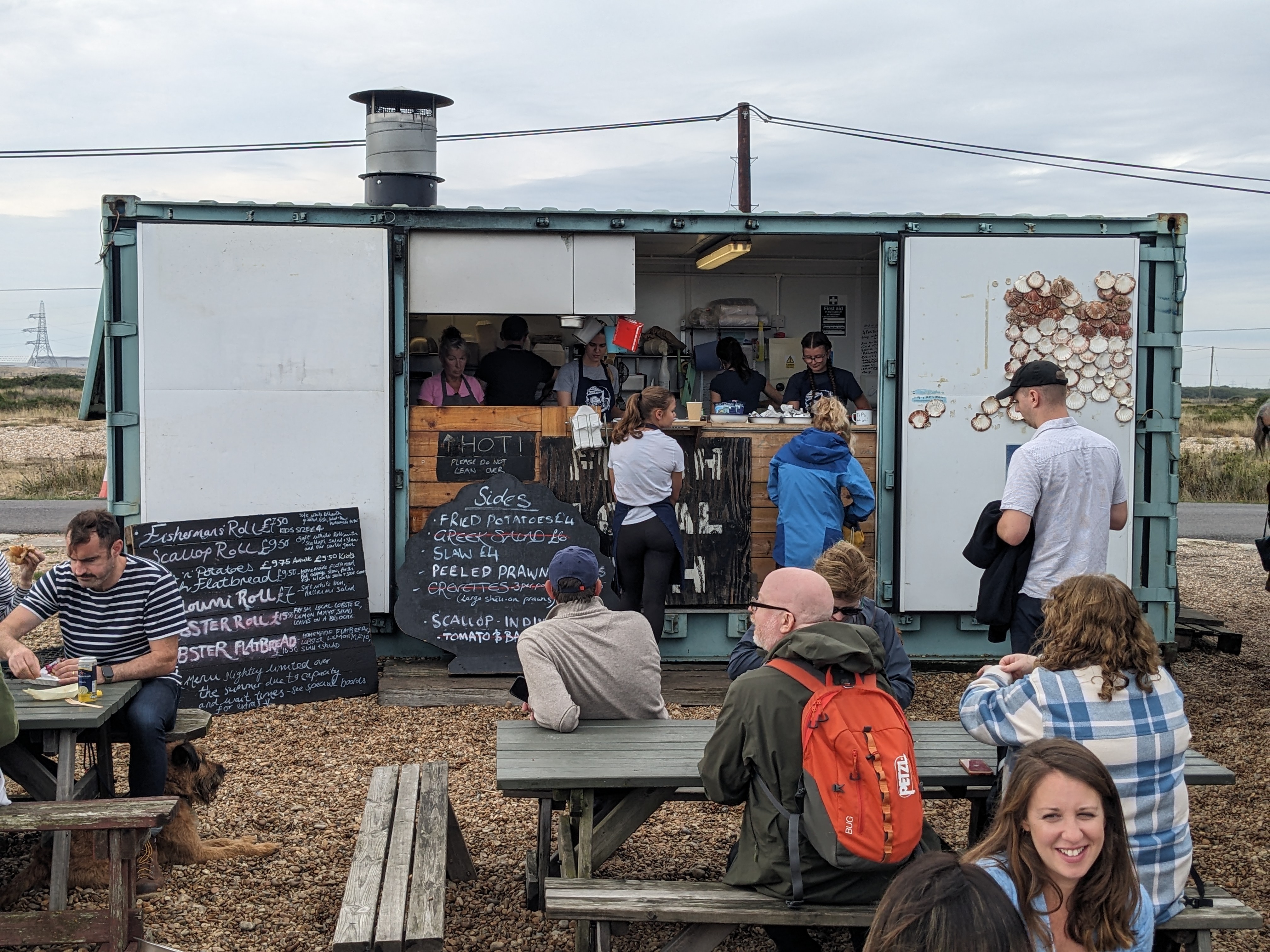
Enough navel gazing. If you go to Dungeness, walk along the road past Prospect Cottage towards the power station. On your left, after about 200 yards you’ll see a little shack selling fresh fish and the back of a plain blue shipping container. The clue to what lies inside is the line of cars parked up on the shingle - locals collecting take-aways. The shipping container is a foodie gem serving fabulous scallop rolls, fresh fish wraps and lobster parcels. Don’t miss it. It’s a surprising and joyful experience - exactly the right food in exactly the right place.