When is a meadow not a meadow?
I have my head deep in a border, prising strands of horsetail out of a clump of geraniums. Out of the corner of my eye I spot a visitor heading purposefully towards me. I’m fairly certain I know what she will say. ‘I have to ask you’, she says. 'How have you managed to get your meadow to look like that? I’ve tried so many times and nothing comes up.’
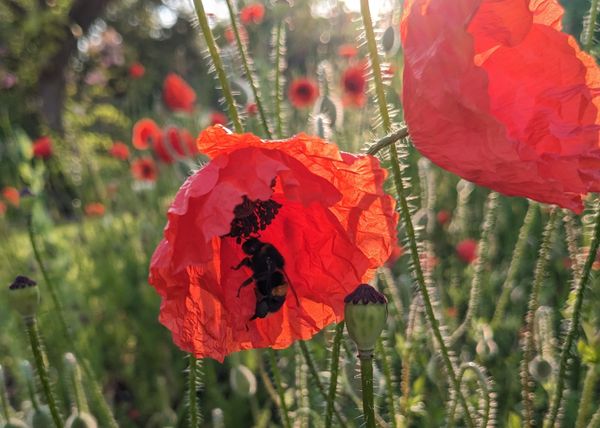
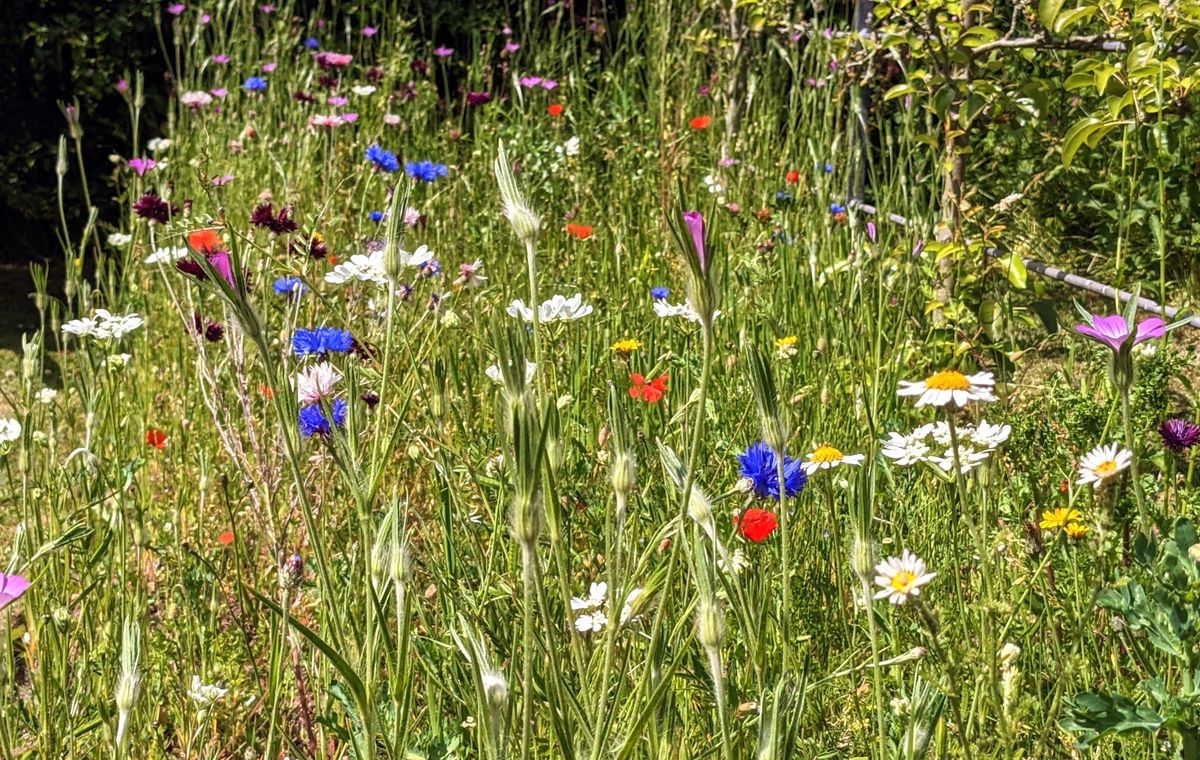
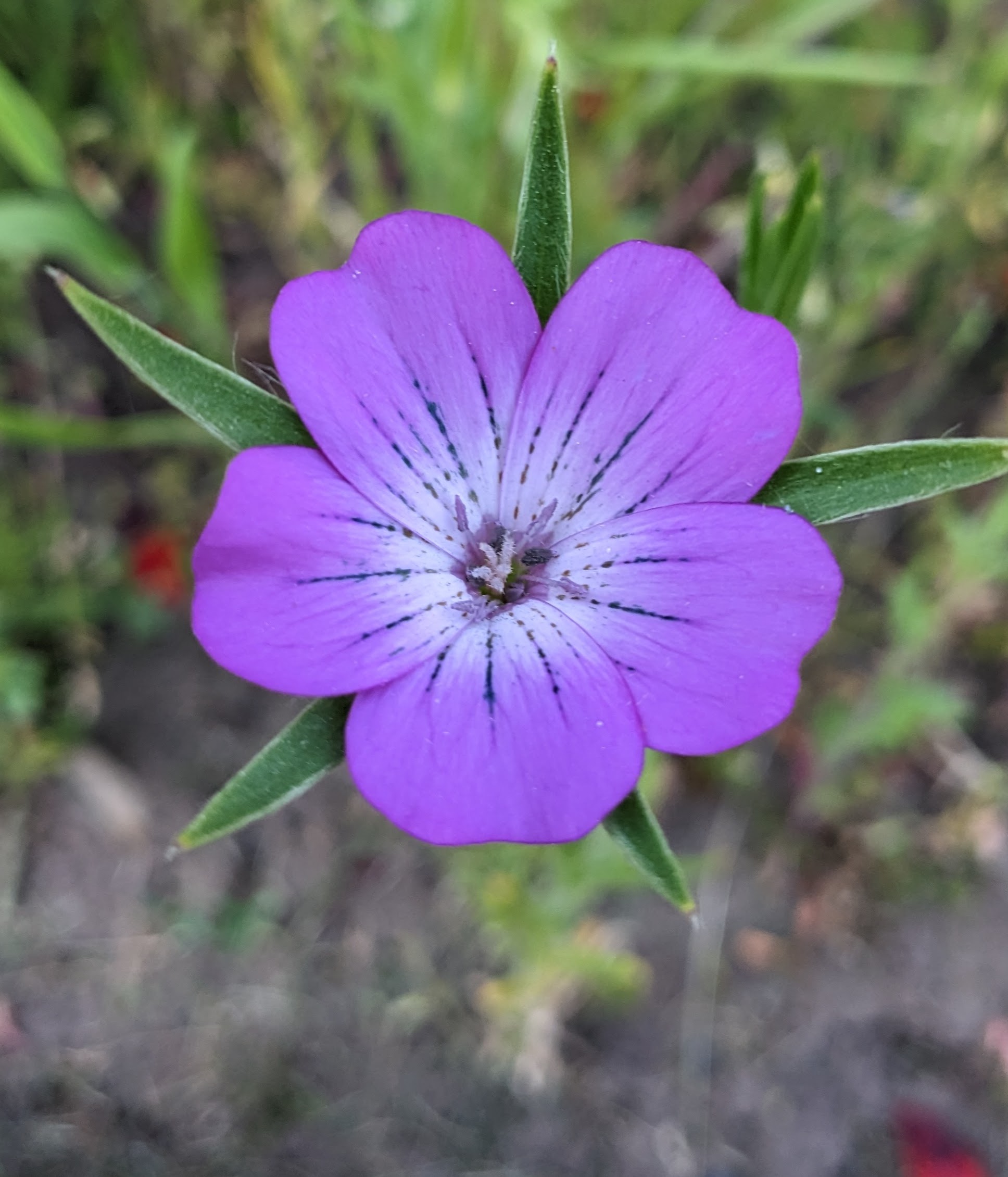
We walk over to the small, colourful stripe of cornfield annuals and I gesture gently towards the cornflowers, poppies and corncockles. ‘You mean these?’ I suggest. ‘Yes,’ she says, ‘I’ve sown dozens of packets and only ever seen about three flowers. How have you done it?’
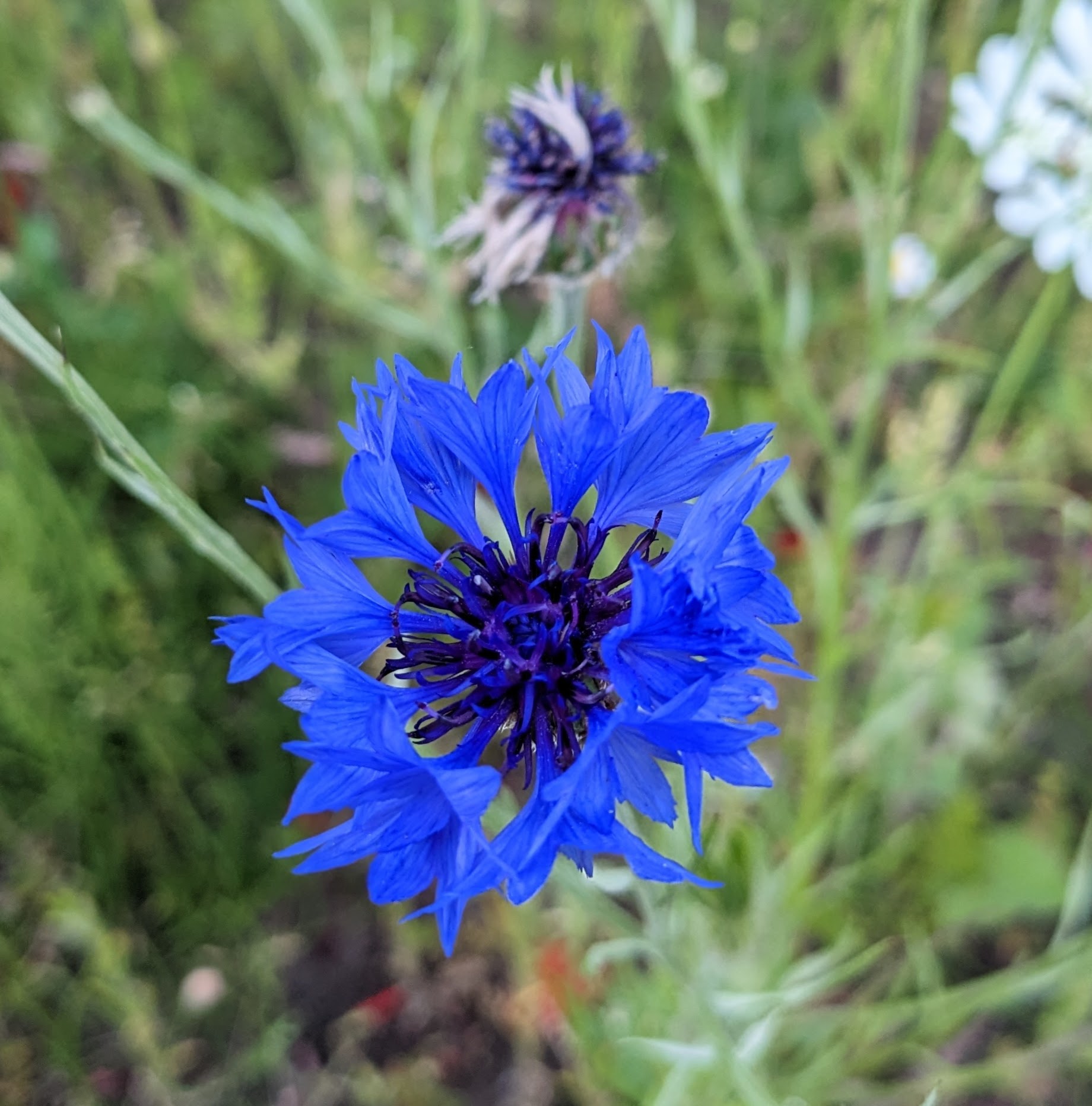
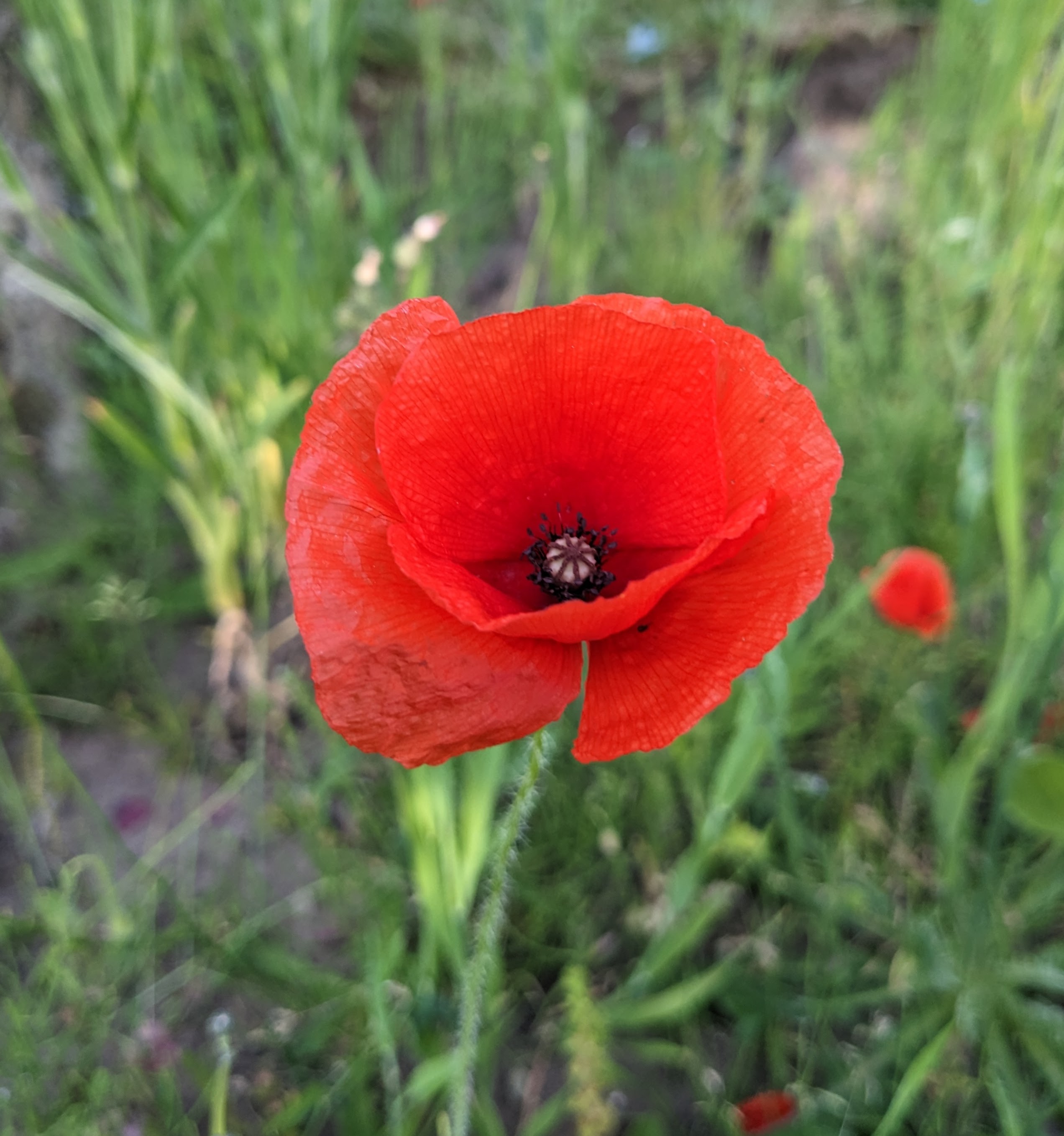
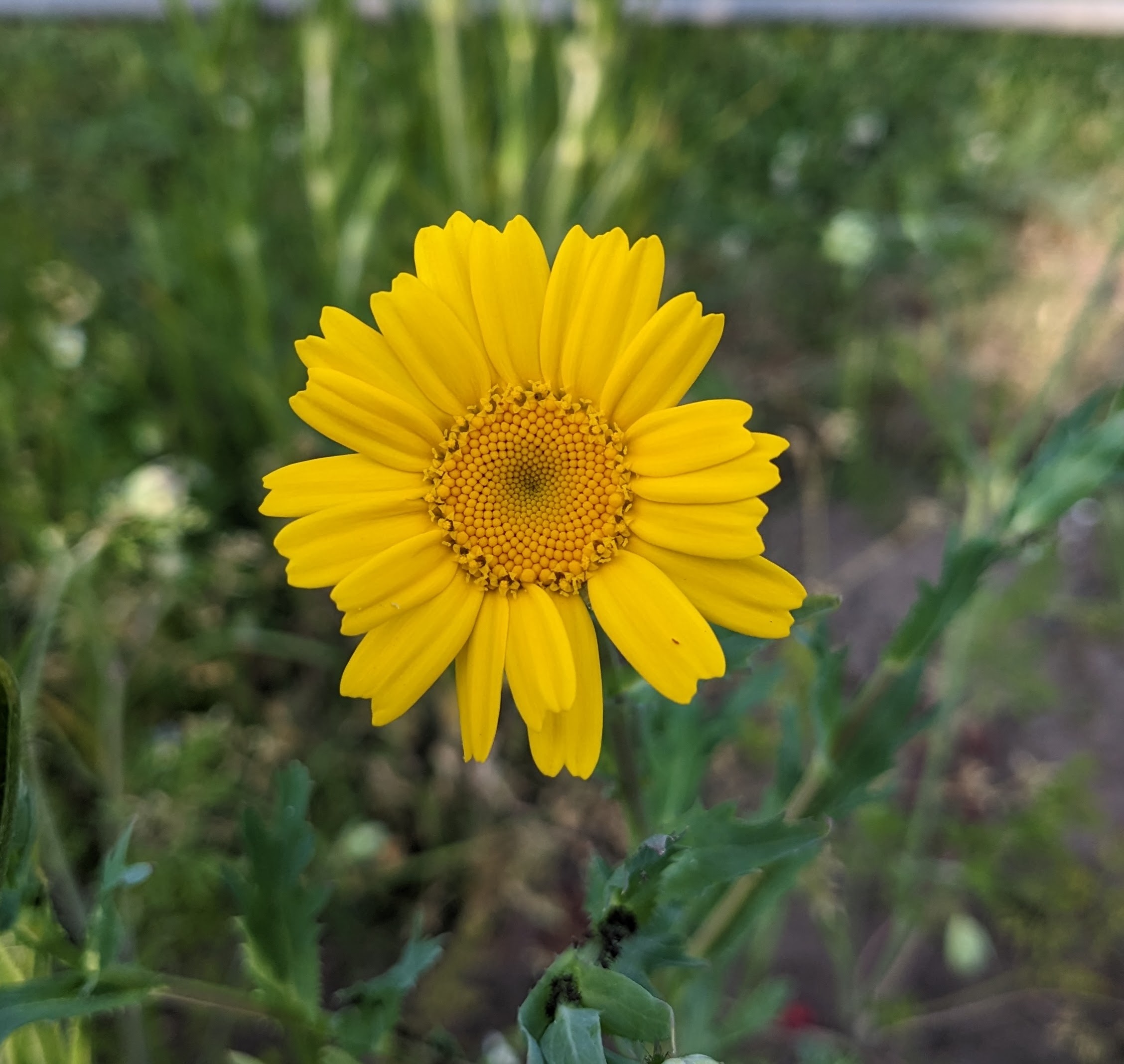
She isn’t the first person to ask and it’s very easy to see why people are perplexed.
The top picture is not a meadow - it’s a bed of annual wildflowers. These were once the ‘weeds’ that grew in fields of wheat, barley and oats, self-seeding in the bare, freshly harrowed soil after harvesting. We don’t see them in the fields now, of course, not since the 1950’s. Everything except the desired commercial crop is sprayed off with weedkiller.
Before you howl in protest, you should know that some of these plants are poisonous - the corncockle seeds are especially toxic. Removing them from our bread flour was necessary. Of course, we gardeners are now being encouraged to grow these in our gardens as native, wildlife friendly plants.
All of these wildflowers produce copious amounts of seed and both the seeds and the young seedlings are tough, able to survive the hardest of winters. So what went wrong with my visitor’s attempts to grow them?
I know what happened before she tells me. She sprinkled them in her lawn, or in some long grass, hoping that they would adorn her green sward with sparkles of blue, red and yellow. She wanted a ‘jewelled’ meadow, an ‘on trend’ idea too often seen in aspirational magazines.
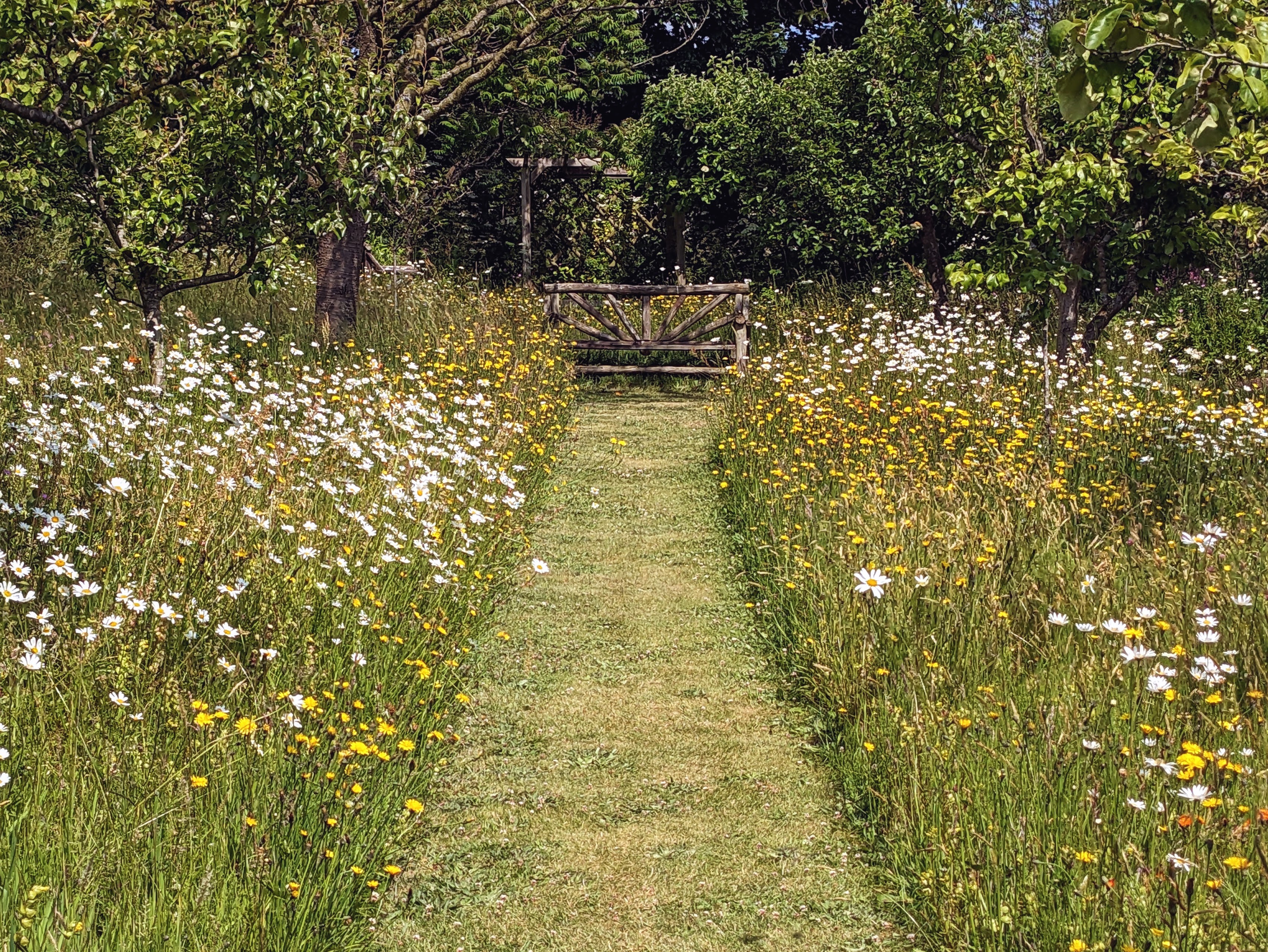
If you’ve been following the clues, you’ll have already grasped what the problem was. They are not the wildflowers of grassy meadows. They are annuals that need bare soil to germinate and grow in. The odd one may find a little patch of bare soil where are mining bee or a passing mole has created a little seed bed amid the grasses, but they can’t self seed in permanent turf. Yes, you can cut out sections and add annuals in each year, but what a palaver…
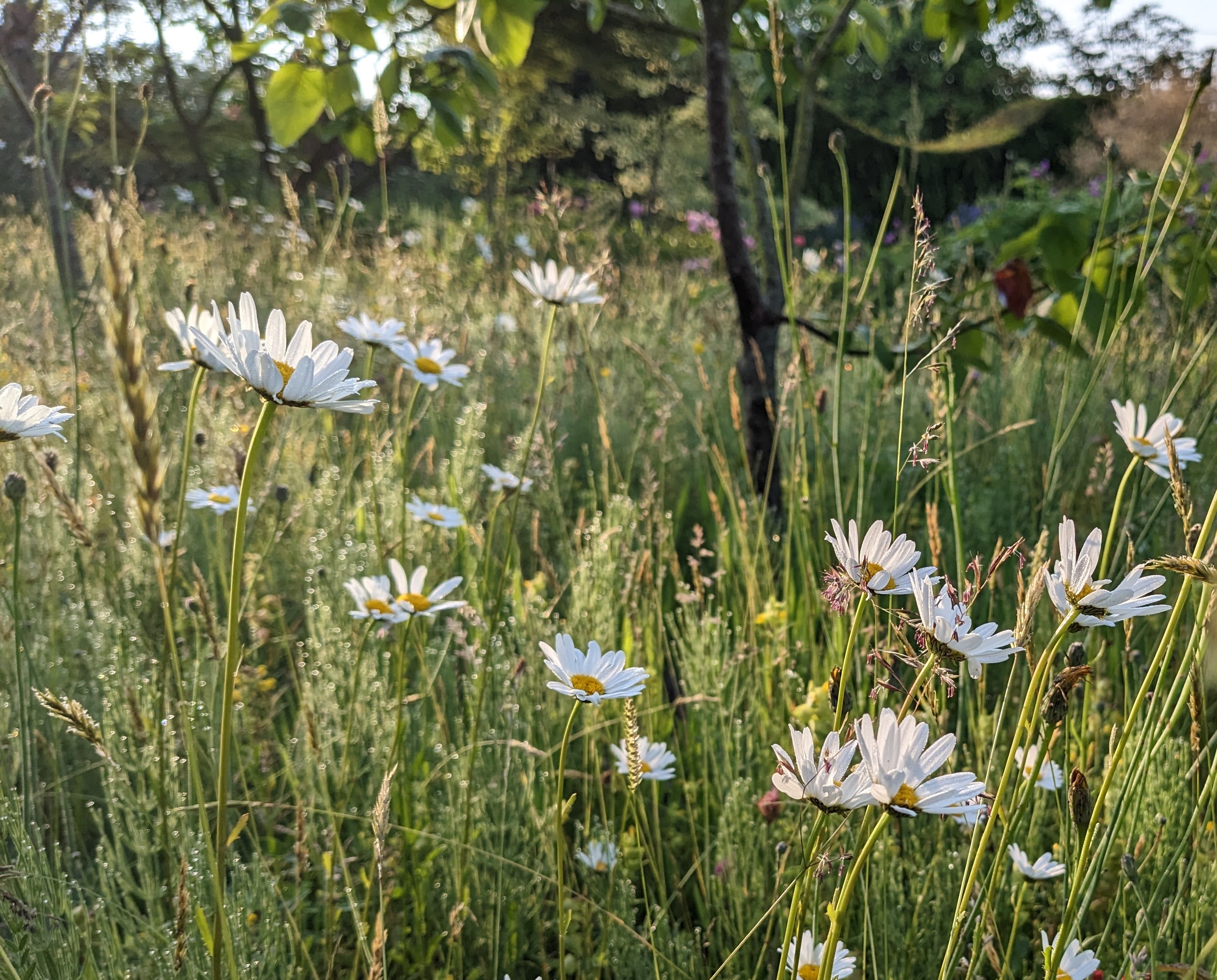
The flowers that naturally sparkle in our orchard meadow are perennial, holding their place among the grasses to re-flower year after year. Look down at a lawn which hasn’t been treated with weedkiller and you’ll see tough little rosettes and tangles of flattened stems, clinging on under the scything lawnmower blades. These are the meadow wildflowers, adapted to cope with grazing animals, frost, torrential rains, drought and relentless sun.
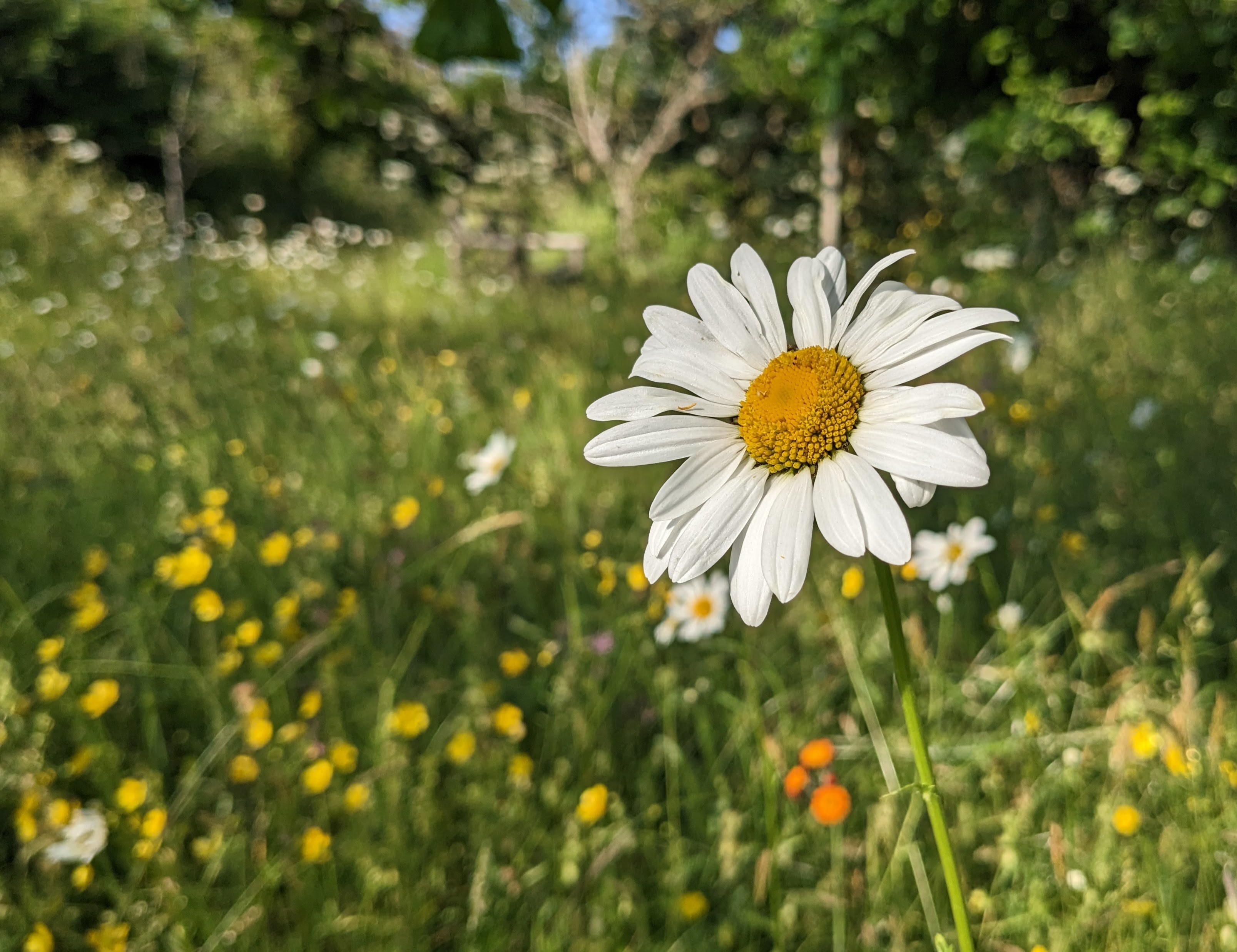
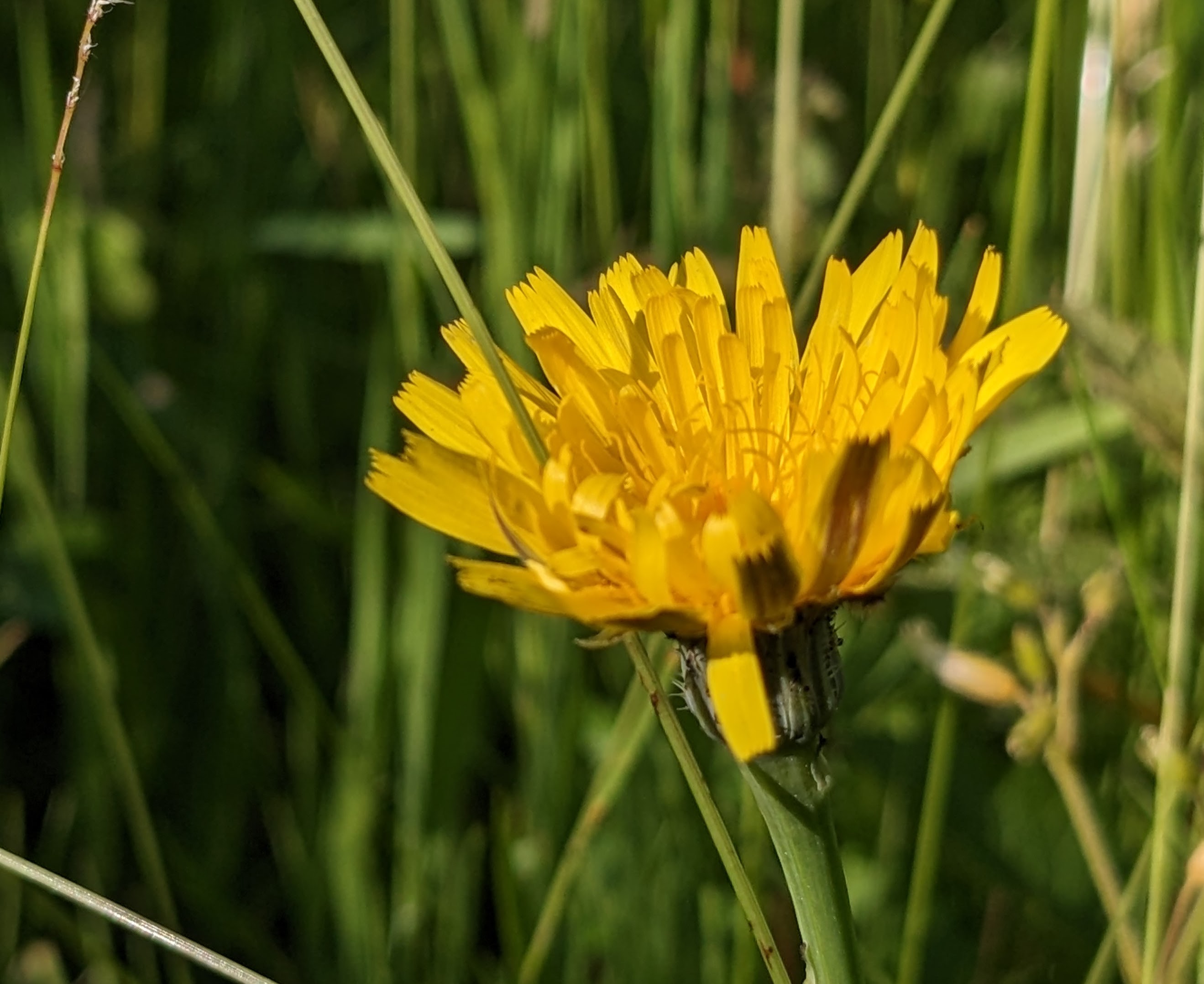
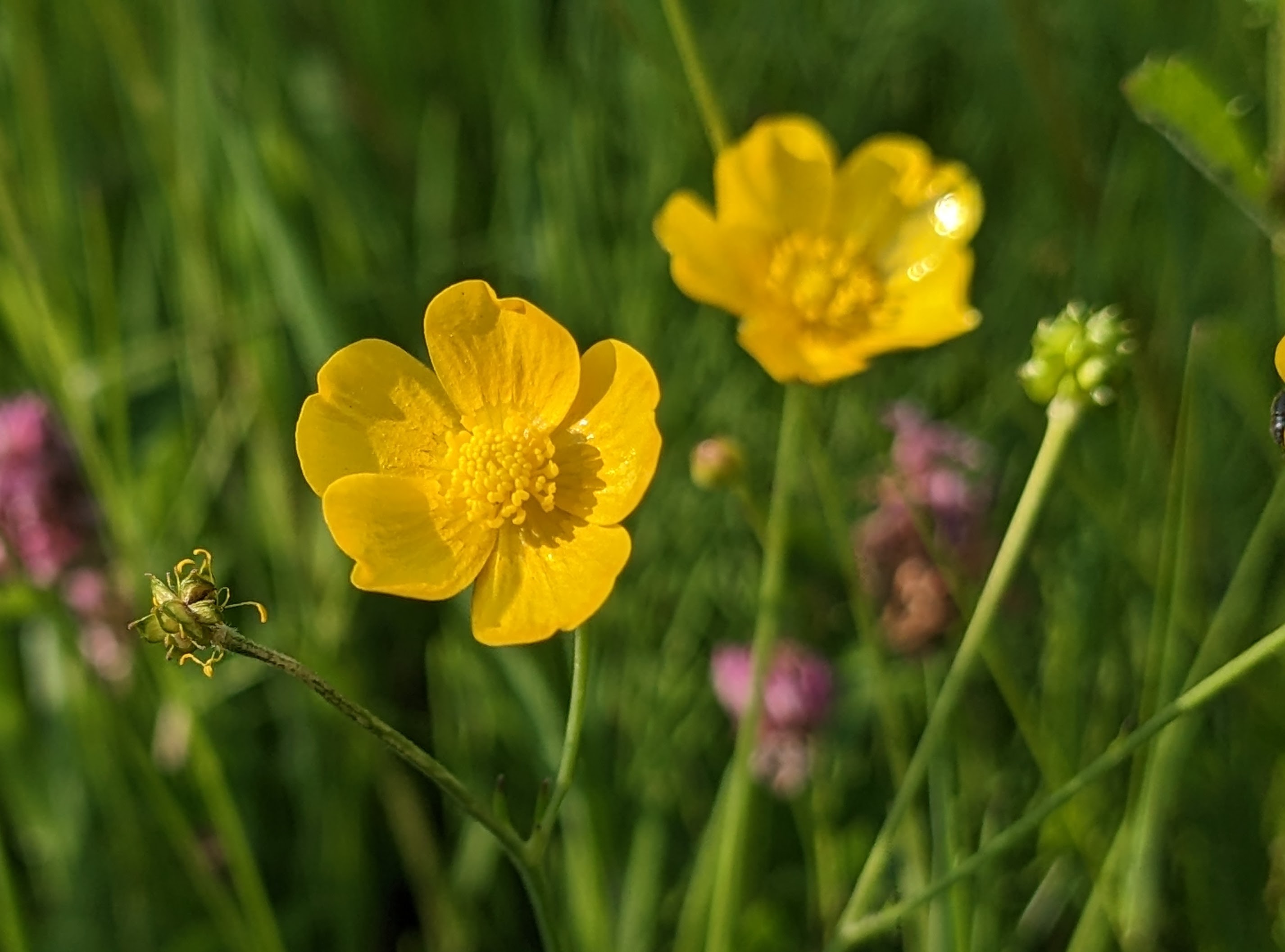
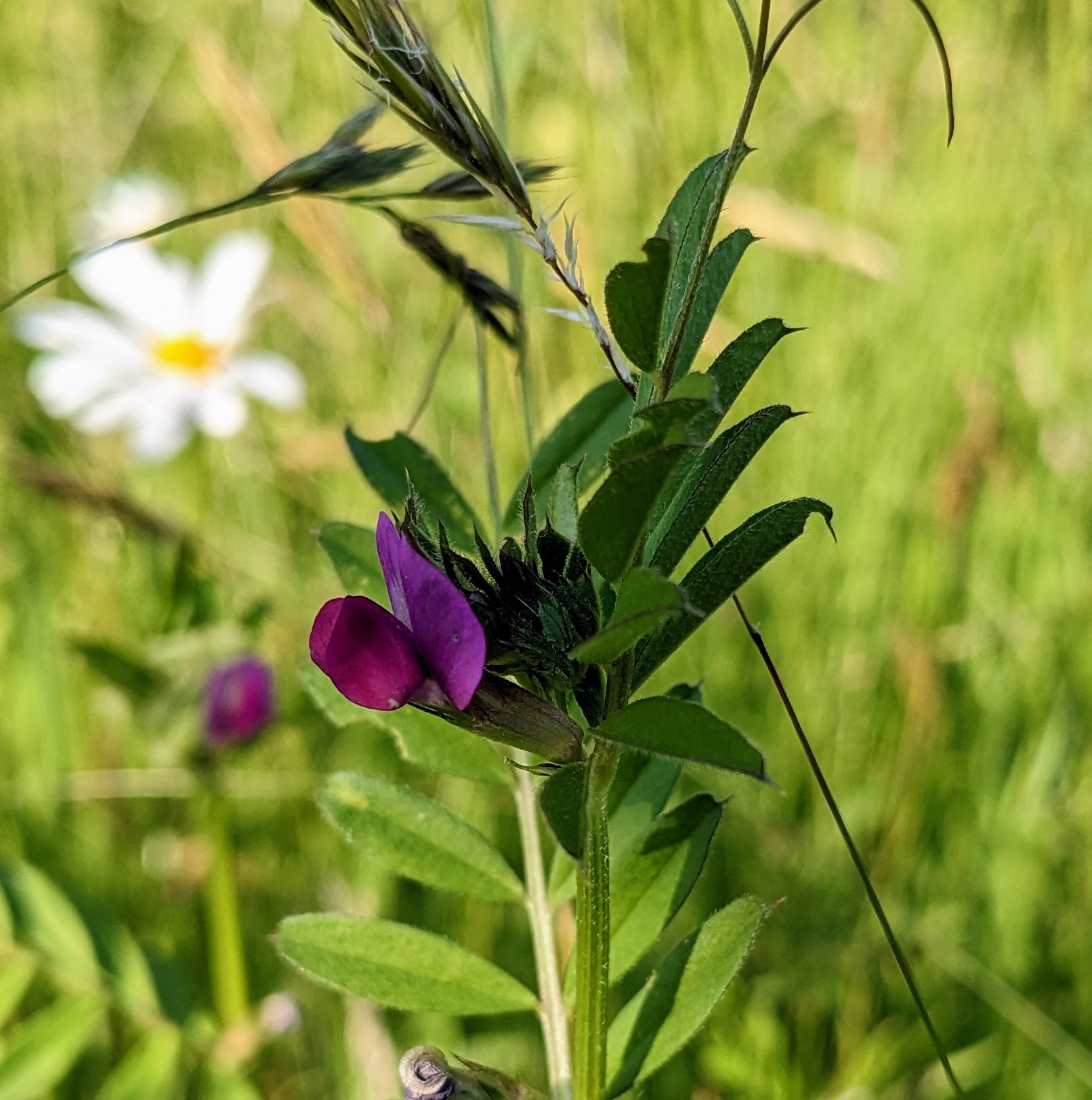
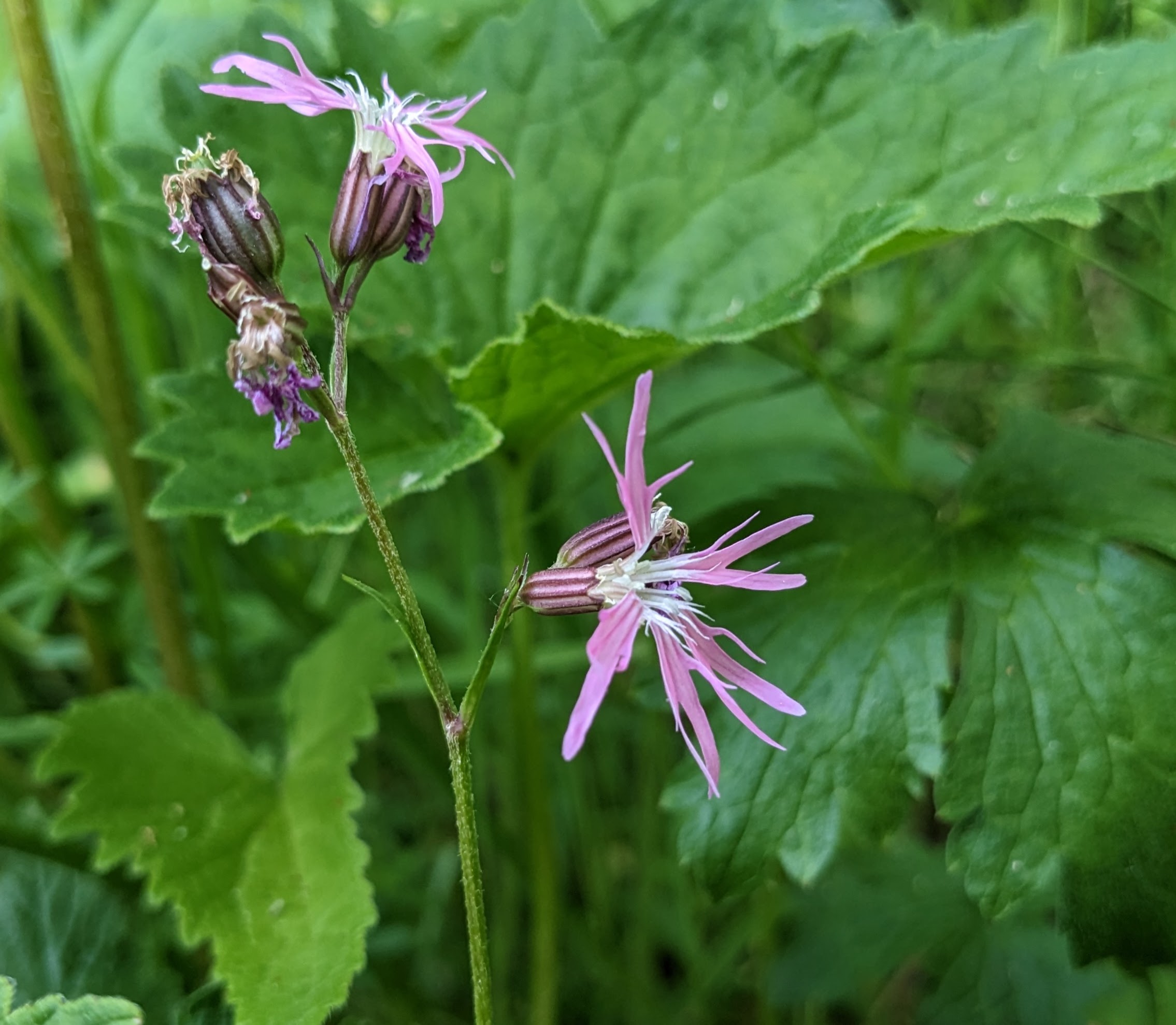
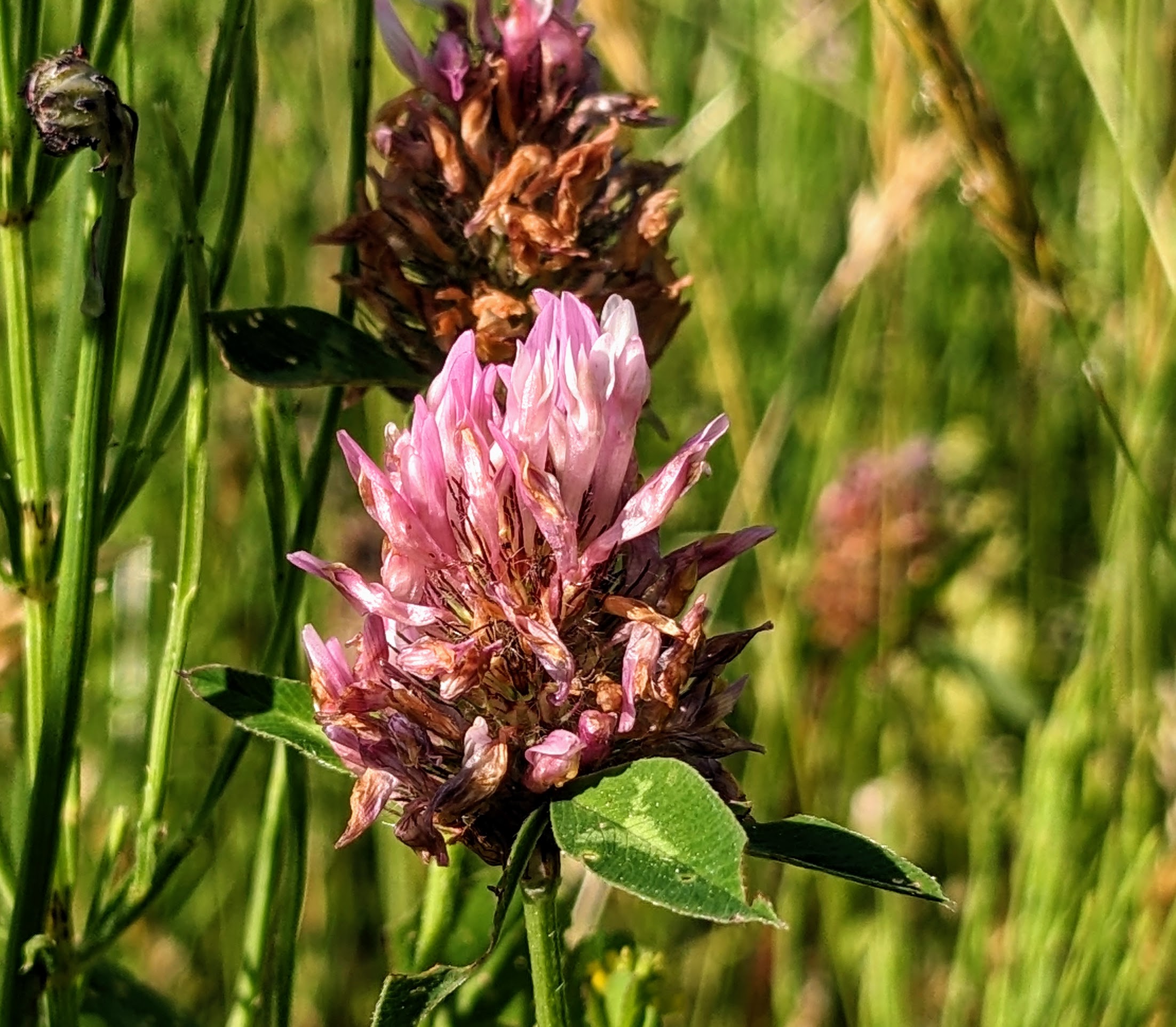
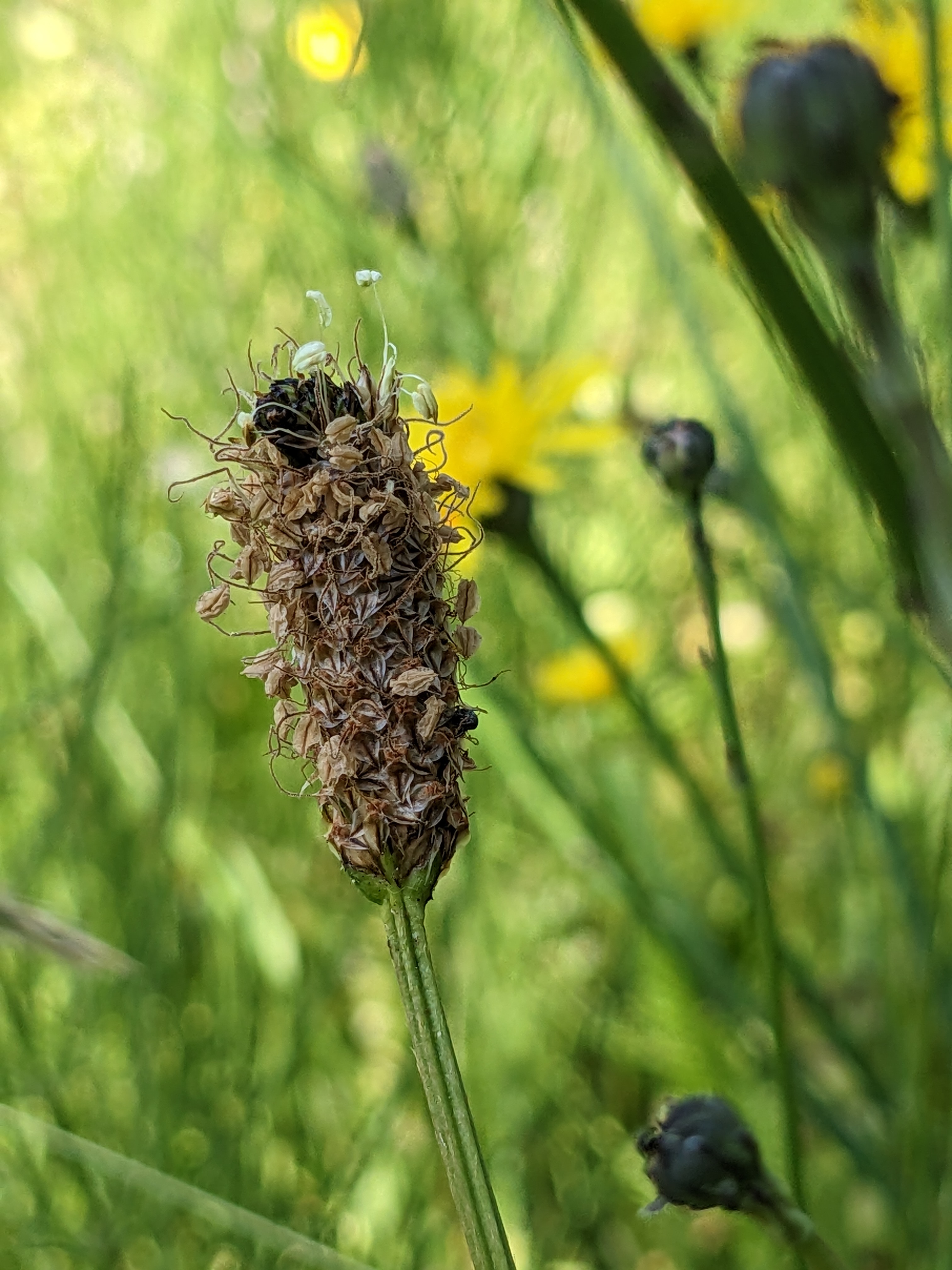
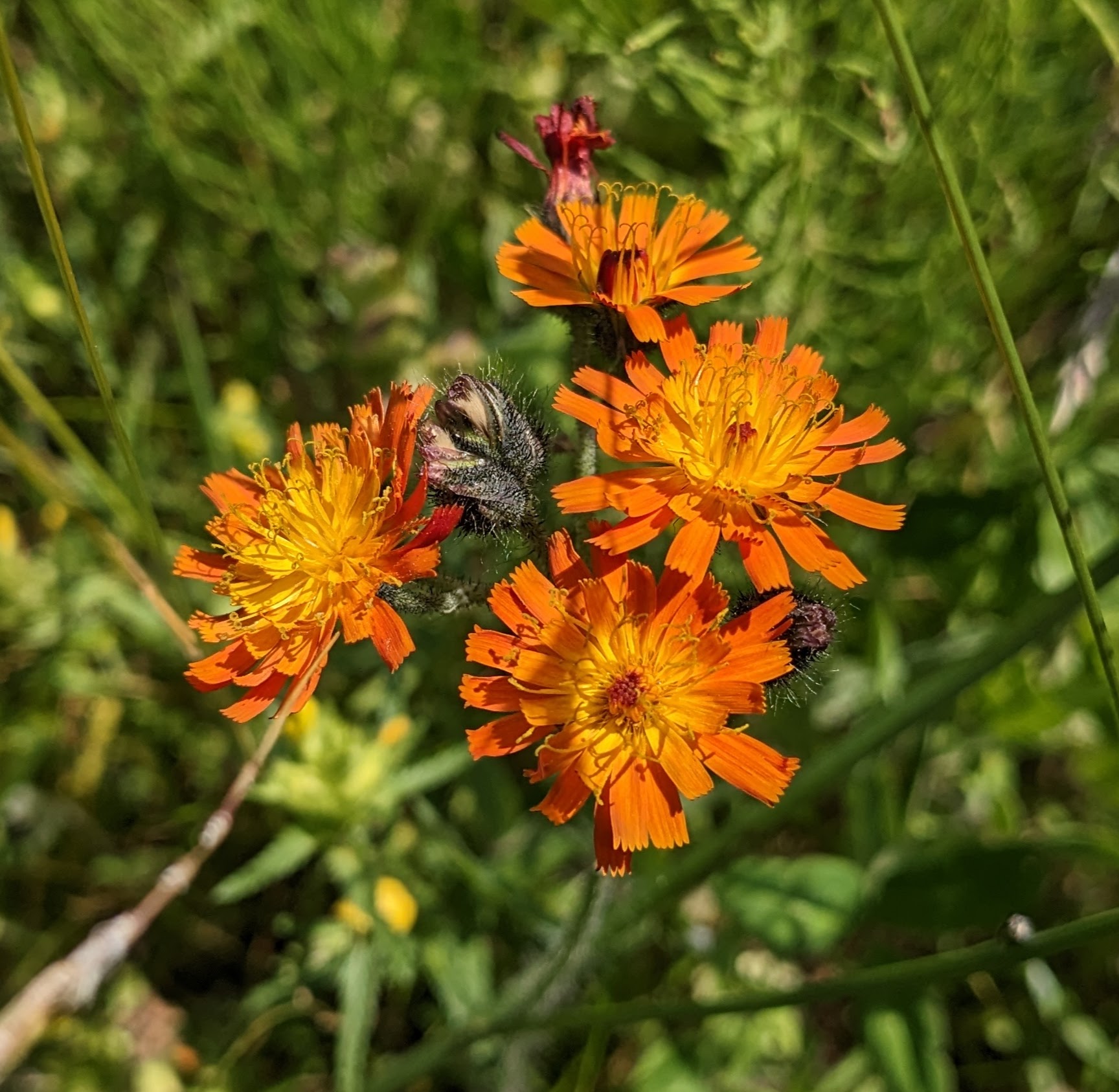
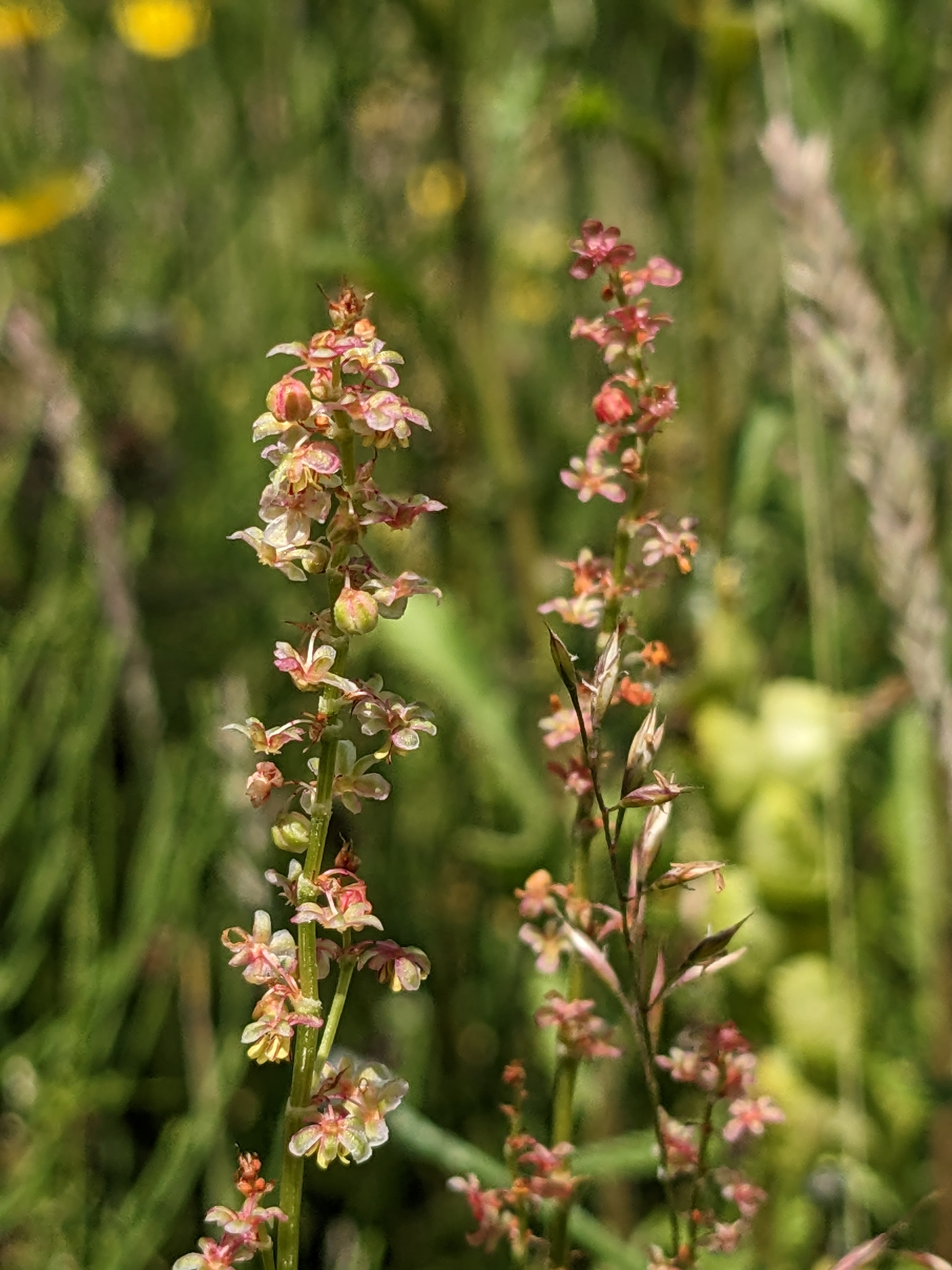
I created our orchard meadow around ten years ago by stripping off the old turf with a turf cutter, then lightly rotavating the surface to provide a ‘key’ for the wildflower seeds. I knew the grasses would grow back - my aim was not to kill them off, just to give the flowering plants a bit of a head start. I bought a kilo of mixed native perennial wildflower seeds online, scattered them, watered them in and left it alone.
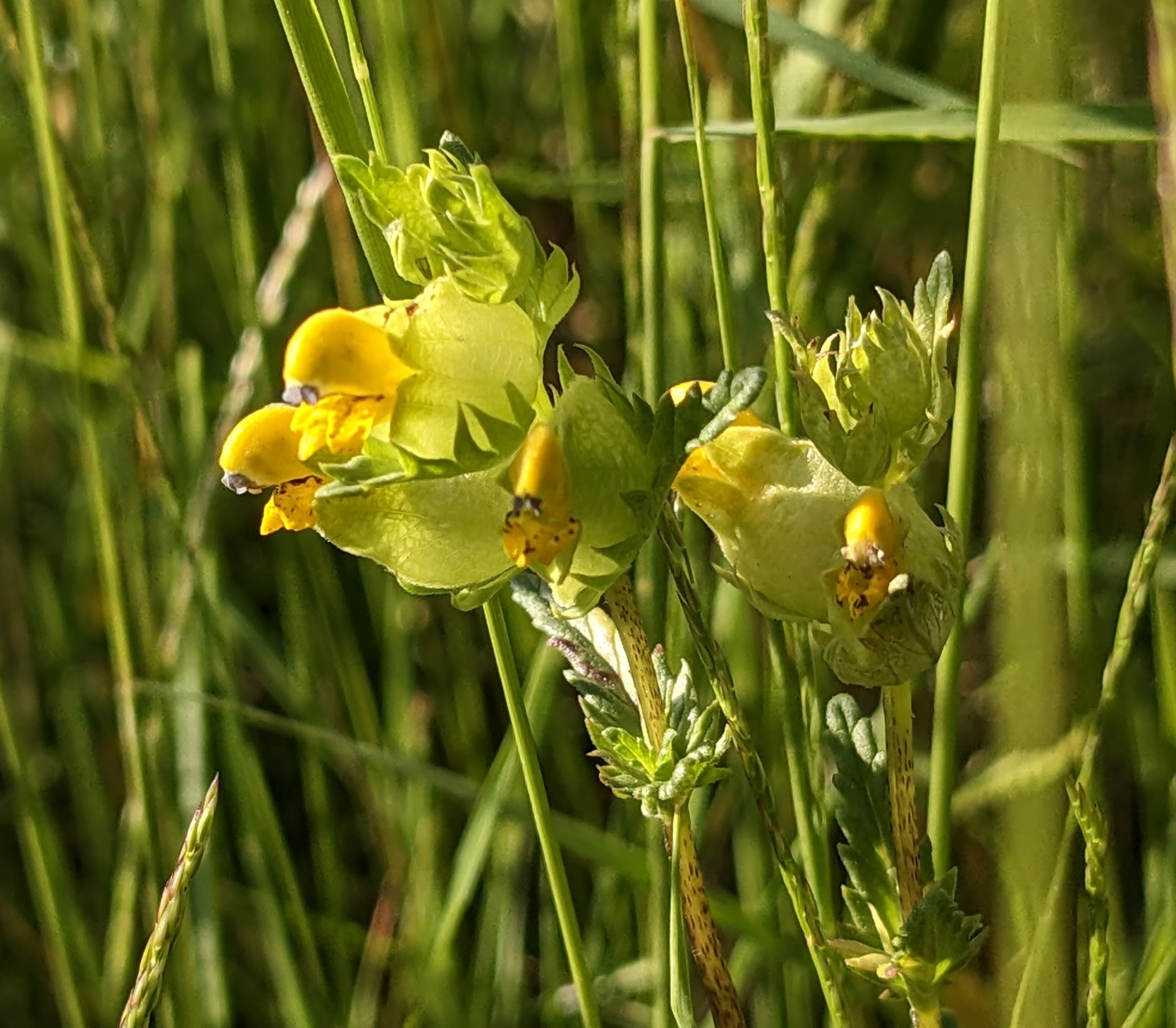
Nature will have its way in a meadow - no matter what you sow, in the end your soil and location will reject whatever is unsuitable and encourage what likes it. It helps that the soil under my stripped-off turf is sandy, pale and dry. This doesn’t suit the heftier, bigger leaved plants, instead favouring daintier looking, fine leaved flowers. Yellow rattle has settled in nicely too - an annual which is semi-parasitic on grass roots. It’s quite obvious that in the patches with the most yellow rattle, the grasses are thinner and weaker and the wildflowers more prolific.
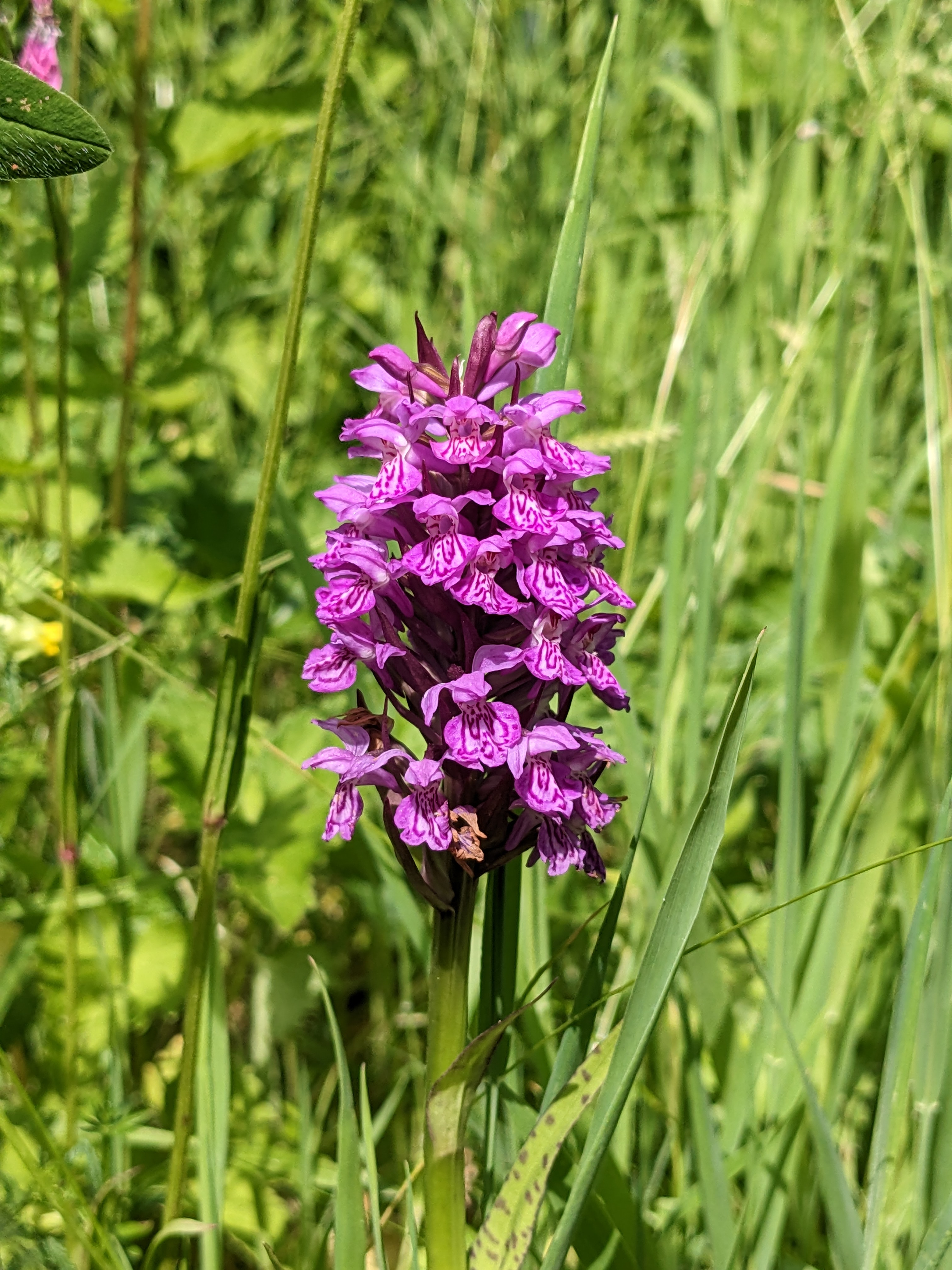
It’s a truism that if you leave nature alone for long enough, something special will move in. Meadow orchids arrived a few years ago, just one or two at first. This year there are at least a dozen. Footprint sized patches of crushed grass around them tell me that visitors have stepped in for a closer look. I don’t mind - I’ve done the same myself.
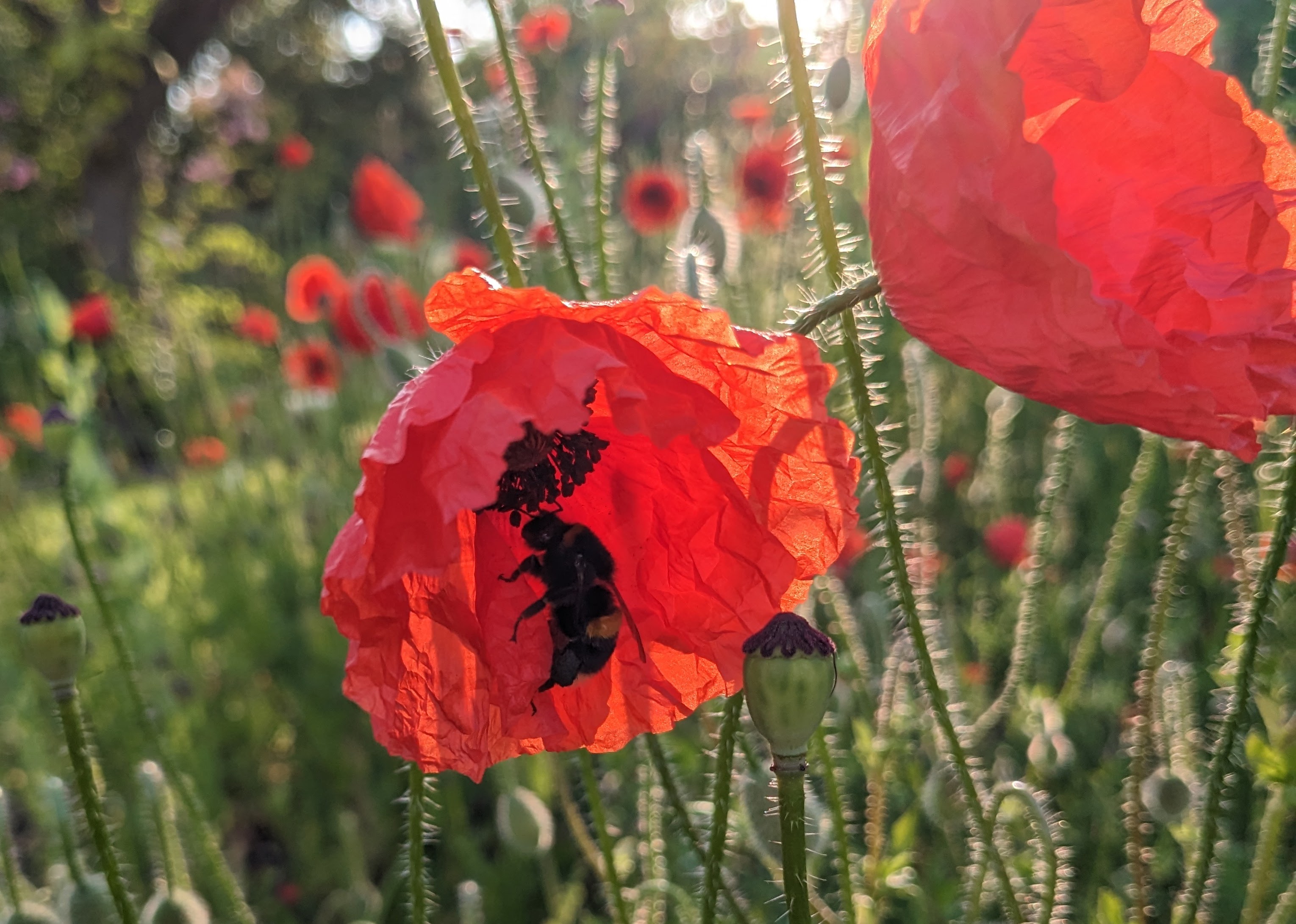
I haven’t yet answered my visitor’s question. To create our annual wildflower bed, I collect the seed, then clear the patch of weeds, lightly fork it over and leave it bare before re-sowing the seed the following spring. This little strip by the entrance is the only part of the garden where we do this. It’s time-consuming and a faff. Each year I wonder whether to bother with it - every other area is permanently planted.
I was going to close without one of my little ‘thoughtlets’. The orchid set me thinking though. We made a meadow and the orchid turned up, which you might argue is an example of ‘build it and they will come’. But all we did was stop mowing and sow some seeds to speed the creation of what would probably have been there if no-one had ever mowed it. Perhaps it’s more a case of ‘leave well alone and they will come.’